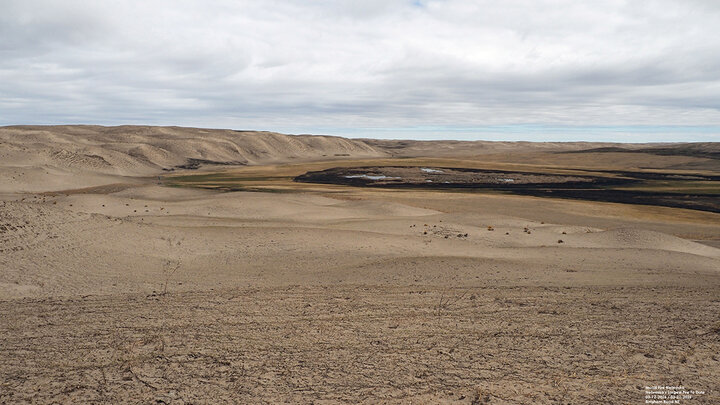
The U.S. Department of Agriculture (USDA) Farm Service Agency (FSA) is now accepting applications for the Emergency Conservation Program (ECP) in several Nebraska counties impacted by March wildfires.
ECP has been authorized for implementation in these counties to address damages from these wildfires:
- Morrill Fire: Arthur, Garden, Grant, Keith and Morrill
- Cottonwood Fire: Dawson and Lincoln
- Road 203 Fire: Blaine, Thomas
- Anderson Bridge Fire: Cherry
- Ashby and Minor Fires: Grant, Garden
ECP provides cost-share and technical assistance to producers to restore farm and ranch land to pre-disaster conditions following a qualifying natural disaster. ECP signup in the above-listed counties ends on Friday, June 26, 2026.
“The Farm Service Agency can help producers and landowners recover from wildfires that impacted their operation,” said Hilary Maricle, FSA state executive director for Nebraska. “If you have a need for cost-share assistance associated with debris removal, fence repair or replacement, water structure repair or replacement, or other restoration needs associated with these wildfires, please call your county office about ECP.”
Approved ECP applicants can receive up to 75% of the allowable cost of the approved restoration activity, with a maximum cost share of $500,000 per natural disaster event.
Approved ECP practices include:
- Non-engineering practices:
- Debris removal
- Fence restoration
- Water structure restoration
- Windbreak-shelterbelt establishment
- Check with FSA before beginning other work such as:
- Repairing dams, ponds, irrigation field ditches, lined waterway or underground outlet
- Grading, shaping or releveling
- Repairing grade stabilization structures, grassed waterways or terraces
ECP cost-share assistance can provide advance payments for up to 25% of the total allowable cost for all ECP practices before the restoration is carried out. The advance payment must be spent within 60 days.
Producers who lease federally owned or managed lands, including tribal trust land, as well as state land, are eligible to participate in ECP.
Conservation concerns present on the land prior to the qualifying natural disaster event are not eligible for ECP assistance.
Eligibility and Environmental Requirements
To allow producers to begin their recovery efforts sooner, FSA is offering flexibilities that apply to certain non-ground disturbing practices.
FSA is waiving the onsite inspection for certain ECP practices such as the removal of debris and repair of fencing. Additionally, FSA is waiving the requirement for producers to obtain prior approval to conduct removal of debris and fence repair or replacement to support critical disaster recovery efforts.
FSA is streamlining environmental compliance reviews due to the impacts of this disaster event. However, FSA will continue to complete on-site environmental reviews for applicants who do not meet the required conditions for non-ground disturbing practices.
More Information
To learn more about ECP as authorized for implementation in the listed counties, producers can contact their County FSA Office. Producers who want to apply for ECP are encouraged to call their County FSA Office to schedule an appointment.
FSA helps America’s farmers, ranchers and forest landowners invest in, improve, protect and expand their agricultural operations through the delivery of agricultural programs for all Americans. FSA implements agricultural policy, administers credit and loan programs, and manages conservation, commodity, disaster recovery and marketing programs through a national network of state and county offices and locally elected county committees. For more information, visit USDA FSA's website.


