Wheat Disease Update: Freeze Injury Dominates, Rust Risk Emerging in Eastern Fields

May 22, 2026

Wheat Disease Update: Freeze Injury Dominates, Rust Risk Emerging in Eastern Fields

By Stephen Wegulo - Extension Plant Pathologist, Kyle Broderick - Extension Educator and Coordinator of the UNL Plant and Pest Diagnostic Clinic, Janis Fomba - Graduate Research Assistant, Sujan Gautam - Graduate Research Assistant

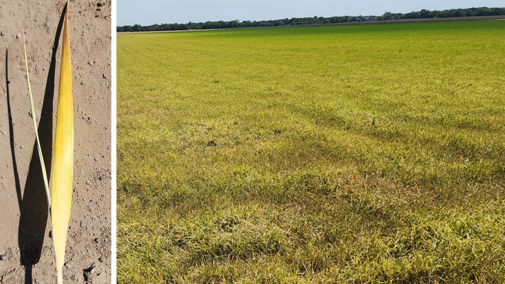
Yellowing rice field under a clear sky, with a close-up of a leaf on dry soil.

Nebraska wheat surveys conducted in mid-May found widespread freeze injury and drought stress, along with emerging rust pressure and isolated viral diseases in some fields.

Stephen Wegulo/Nebraska Extension

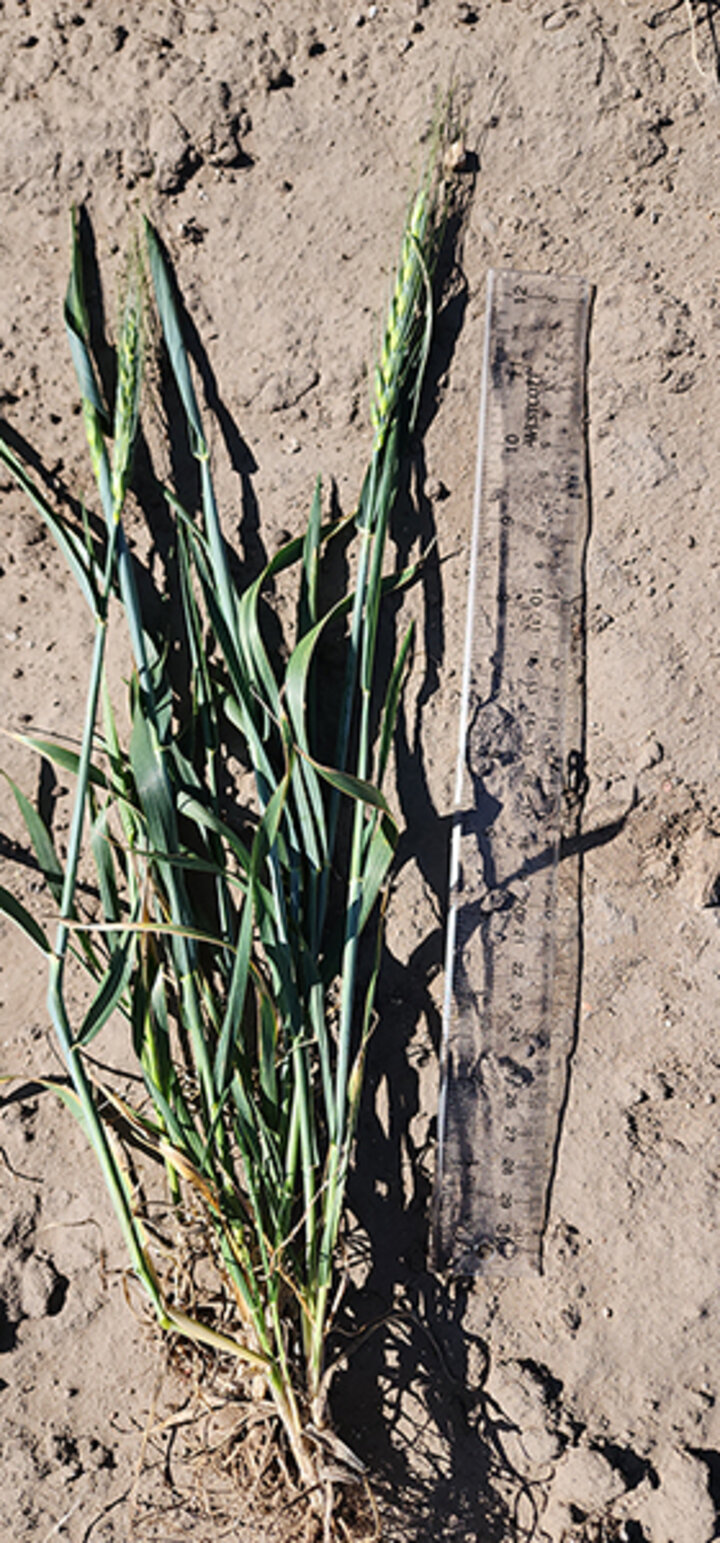
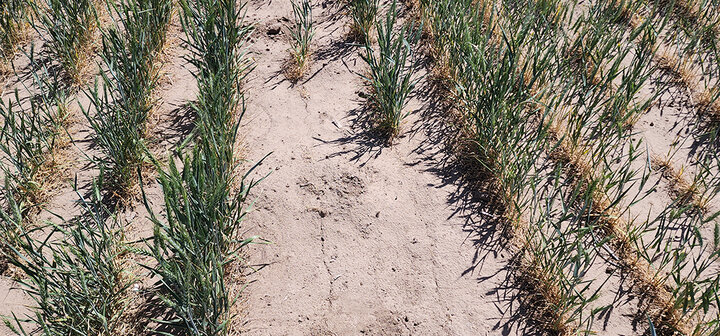
Wheat disease surveys were conducted May 12 to May 21 in the wheat-growing regions of Nebraska. Irrigated fields (Figure 1) looked healthy with normal growth and a lush green canopy. In dryland fields, the soil was very dry (Figure 2) and wheat was stunted, averaging a foot tall (Figure 3). Growth stage ranged from flag leaf emerged in the northern Panhandle to flowering or past flowering in the southeast.
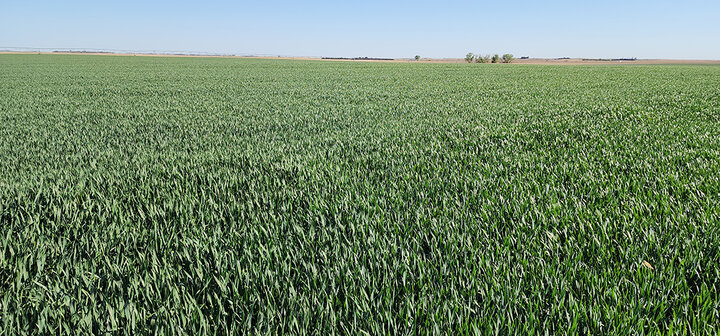
Green farm field stretching to the horizon under a clear, blue sky.
Figure 1. A grower’s irrigated wheat field showing normal growth and a lush green canopy in Perkins County on May 12. Stephen Wegulo/Nebraska Extension
Sparse rows of grass plants growing in dry, sandy soil.
Figure 2. Dry soil and drought-stressed, stunted wheat in a grower’s field in Furnas County on May 12. Stephen Wegulo/Nebraska Extension
Green wheat plant with roots lying on soil next to a clear ruler.
Figure 3. Headed wheat that was about one foot tall at the West Central Research, Extension and Education Center (WCREEC) near North Platte, Lincoln County, on May 15. Stephen Wegulo/Nebraska Extension

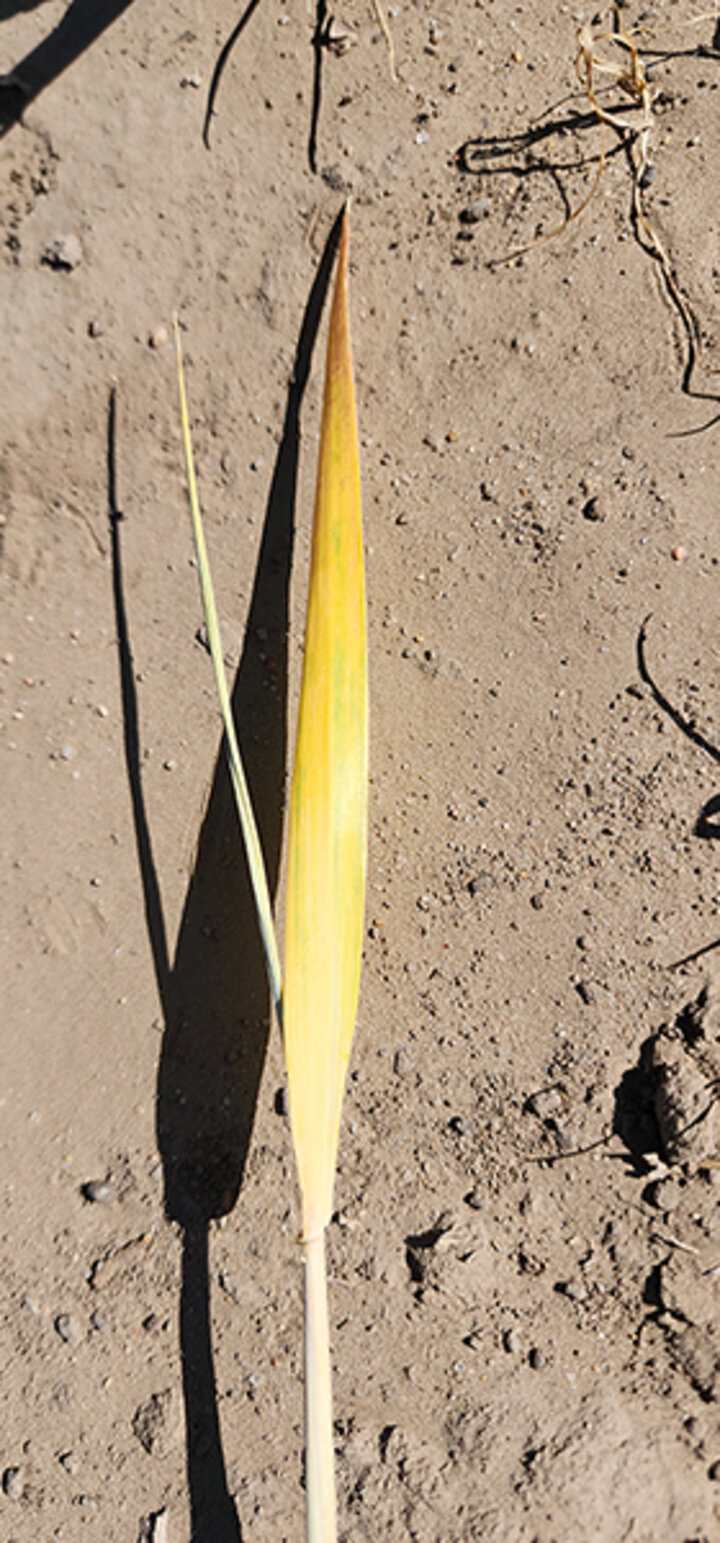
In the southwest, leaf yellowing resembling barley yellow dwarf was observed in some fields (Figures 4 and 5), but it was determined that the yellowing was due to freeze injury that occurred in mid- and late April. In a previous CropWatch article, leaf yellowing in a field at the West Central Research, Extension and Education Center (WCREEC) near North Platte was attributed to barley yellow dwarf. However, a second visit to the same field determined that most of the yellowing was due to freeze injury.
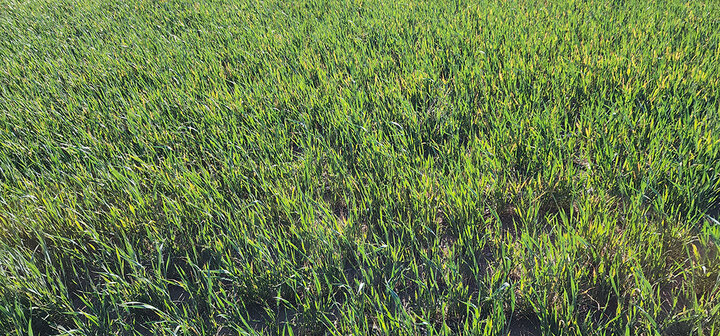
Vibrant green grass field under sunlight.
Figure 4. Leaf yellowing caused by freeze injury in a grower’s wheat field in Perkins County on May 12. Stephen Wegulo/Nebraska Extension
A single yellow and green wheat leaf on dry soil.
Figure 5. Close-up of leaf yellowing caused by freeze injury at the West Central Research, Extension and Education Center (WCREEC) near North Platte, Lincoln County, on May 15. Stephen Wegulo/Nebraska Extension

An isolated case of severe wheat streak mosaic disease complex (Figure 6) was observed in a grower’s field in Colfax County. This field is adjacent to a field that had volunteer wheat that was not controlled before planting wheat last fall.
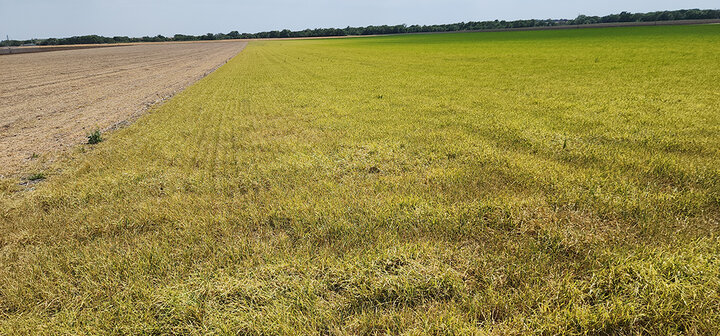
Two fields divided; one with yellow grass, one with green crops under a clear blue sky.
Figure 6. Severe wheat streak mosaic disease complex in a grower’s field in Colfax County on May 15. Stephen Wegulo/Nebraska Extension

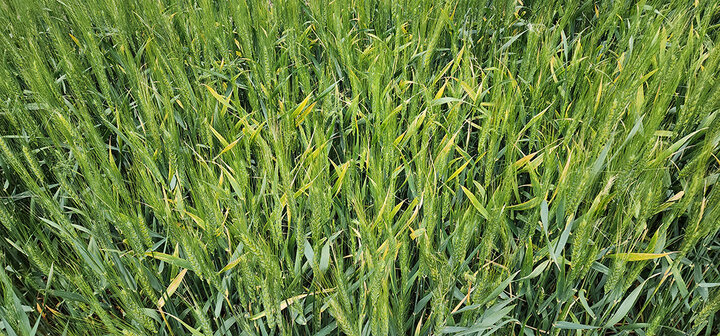
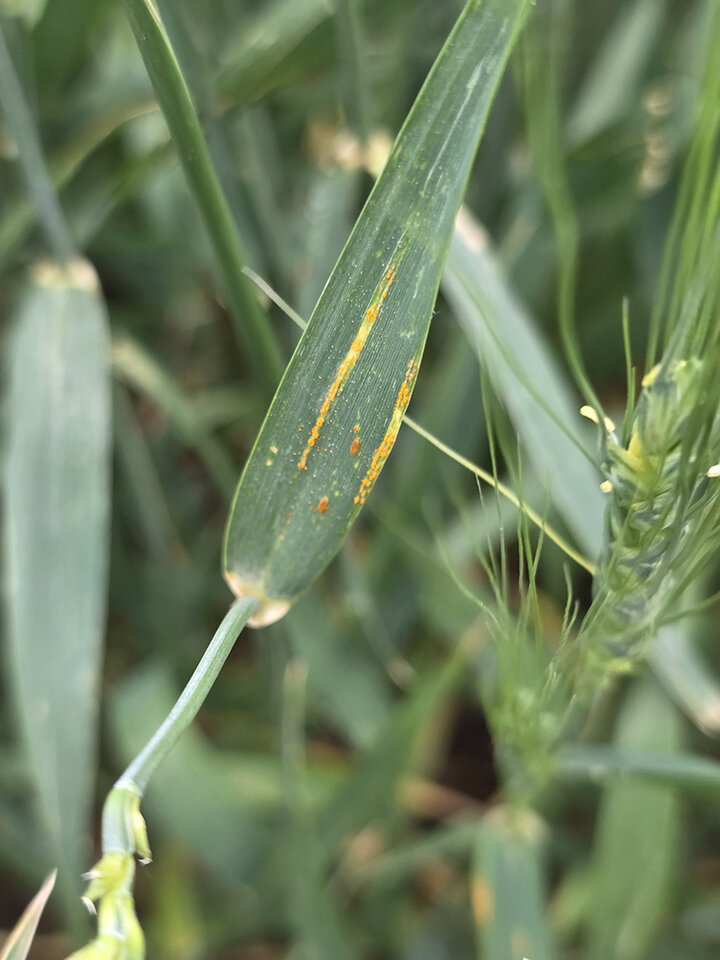
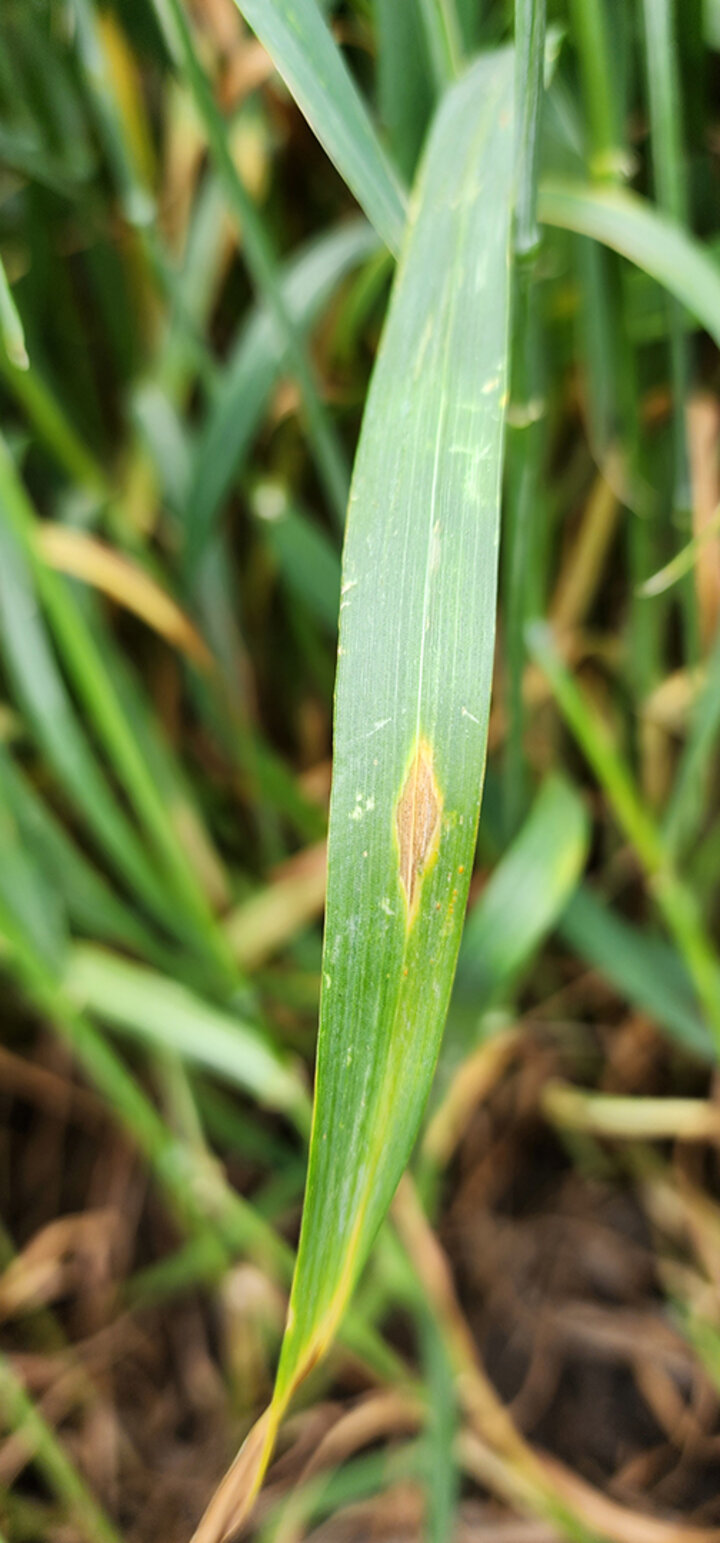
From May 18-21, leaf rust and stripe rust (Figure 7) and fungal leaf spot diseases (Figure 8) were observed in research plots at Havelock Research Farm in Lincoln, Lancaster County. Moderate to high levels of barley yellow dwarf were observed in scattered areas in research plots at Havelock Research Farm (Figure 9).
Wheat leaf with orange rust spots amidst green vegetation.
Figure 7. Leaf rust and stripe rust in research plots at Havelock Research Farm in Lincoln, Lancaster County, on May 21. Janis Fomba/UNL Department of Plant Pathology
Leaf with a yellow-brown disease spot amidst healthy green foliage.
Figure 8. A fungal leaf spot in research plots at Havelock Research Farm in Lincoln, Lancaster County, on May 21. Stephen Wegulo/Nebraska Extension
Dense field of green wheat stalks growing close together.
Figure 9. Barley yellow dwarf in research plots at Havelock Research Farm in Lincoln, Lancaster County, on May 19. Stephen Wegulo/Nebraska Extension

Management

Nothing can be done to alleviate damage caused by freeze injury and virus diseases. The most effective management strategy for the wheat streak mosaic disease complex is to control volunteer wheat before planting wheat in the fall. The volunteer must be completely dead at least two weeks before planting.

Barley yellow dwarf cannot be controlled once it occurs. Insecticide sprays to control the aphid vectors of the virus can reduce disease incidence and spread, but this strategy is effective only if the aphid species present in the field are known to be efficient vectors of the virus. Insecticide seed treatments can reduce spread of the virus by killing the aphid vectors.

Foliar fungal diseases (rusts and leaf spots) can be controlled by applying a fungicide to protect the flag leaf. Currently, wheat in many fields in eastern Nebraska is past the growth stage (early flowering) at which a fungicide can be applied.

Fusarium head blight (FHB) has not been observed and the Fusarium risk tool is showing a low risk in Nebraska. However, the risk has been elevated by recent heavy rainfall in localized areas.  FHB can be suppressed by applying a fungicide at early flowering.
Explore our full collection of CropWatch articles.

Explore Articles