Nebraska winter wheat continues to face significant challenges as the crop moves into May. Poor condition ratings have been reported across much of the state, and multiple sub-freezing events occurred over the past two weeks, with the chance for more freeze events in the days to come.
According to the USDA National Agricultural Statistics Service (NASS) crop progress and condition report for the week ending April 26, 2026, Nebraska winter wheat was rated 21% very poor, 44% poor, 23% fair, 12% good and 0% excellent. This places 65% of the crop in the poor to very poor categories entering the latter part of spring as the crop moves into heading. Drought stress remains the major contributing factor, with both topsoil and subsoil moisture deficient across western and central Nebraska.
In addition to moisture stress, wheat fields have been exposed to damaging cold temperatures. A freeze warning was issued for much of Nebraska ahead of the morning of April 18, with forecast lows ranging from 20 to 25°F across wheat growing regions. Another significant freezing event occurred the morning of April 29.
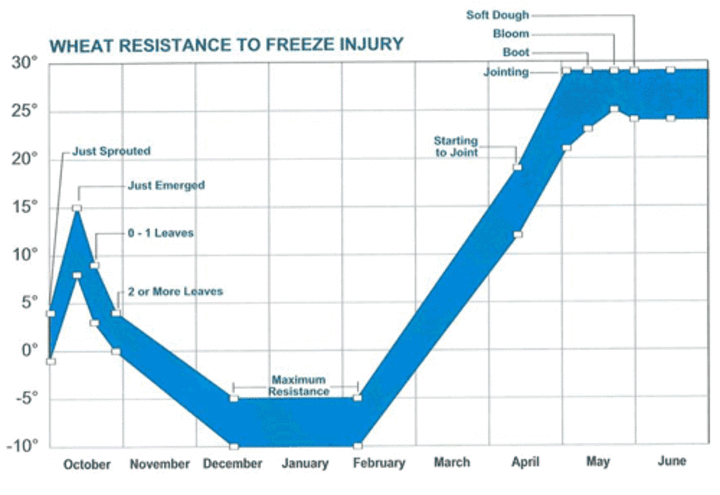
These temperatures, combined with the four- to eight-hour duration they were present, are well within the range known to cause injury to wheat, depending on growth stage and duration of exposure (Figure 1). Wheat that has jointed becomes more vulnerable, as the developing growing point is elevated above the soil surface and can be damaged at temperatures near 24°F if exposure lasts two hours or more.
Unique winter weather patterns in the 2026 crop — including a very mild winter and little snow cover — have impacted winter wheat development. As a result, wheat may be somewhat ahead of or behind normal expectations this year depending on when it was planted and fall growth. At the time of the first freeze this year, much of Nebraska’s winter wheat ranged from jointing to early boot. Some wheat is transitioning from boot to early heading this week.
Potential for injury increases as the wheat continues to develop. Previous significant freeze events happened in 2020 and 2012. In 2012, winter wheat was as much as two weeks ahead of normal growth stage and in one county, winter wheat was largely a total loss from a late freeze on May 9-10. The growth stage in 2020 was more typical, and impacts from the freezes were more mixed.
It takes several warm days (a week or more, depending on temperatures) after a freeze before an accurate determination of injury can be made, and each new freezing event poses additional risks that may take time to become apparent. Producers are encouraged not to rush management decisions following a freeze event.
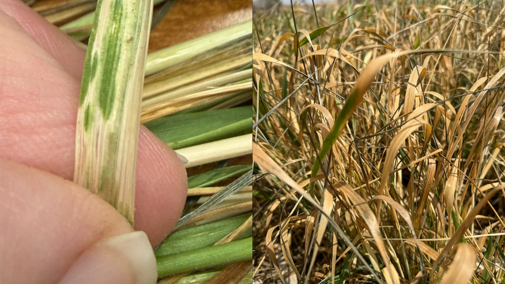
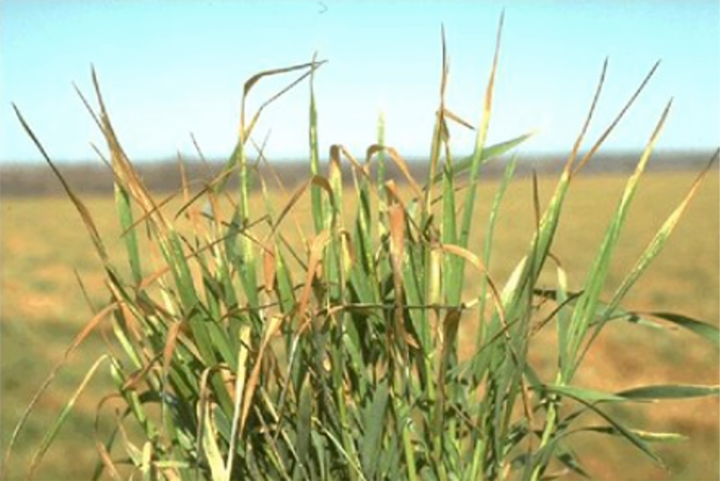
Accurate assessment should include splitting stems to inspect the growing point, as well as overall scouting of the fields. Healthy growing points and immature heads will appear firm and yellow-green/translucent, while damaged tissue will appear water-soaked, white or brown, with a squishy texture. Leaf yellowing alone is not always a reliable indicator of head survival and may look similar to leaf response to other stresses (Figure 2). Table 1 outlines common symptoms and yield impacts by wheat growth stage.
Growth | Approximate | Primary Symptoms | Yield Effect |
|---|---|---|---|
Tillering | 12°F (-11°C) | Leaf chlorosis; burning of leaf tips; silage odor; blue cast to fields | Slight to moderate |
Jointing | 24°F (-4°C) | Death of growing point; leaf yellowing or burning; lesions, splitting or bending of lower stem; odor | Moderate to severe |
Boot | 28°F (-2°C) | Floret sterility; head trapped in boot; damage to lower stem; leaf discoloration; odor | Moderate to severe |
Heading | 30°F (-1°C) | Floret sterility; white awns or white heads; damage to lower stem; leaf discoloration | Severe |
Flowering | 28°F (-1°C) | Floret sterility; white awns or white heads; damage to lower stem; leaf discoloration | Severe |
Milk | 28°F (-2°C) | White awns or white heads; damage to lower stems; leaf discoloration; shrunken, roughened or discolored kernels | Moderate to severe |
Dough | 28°F (-2°C) | Shriveled, discolored kernels; poor germination | Slight to moderate |
Field variability is common following freeze events. Factors such as soil moisture, stand density, residue cover and landscape position influence injury risk, with thinner stands often showing greater damage. In some cases, secondary tillers may survive and partially compensate for yield loss. Remember that temperatures in low-lying areas are even lower and may show more pronounced impacts from freezing.
Nebraska Extension NebGuide EC132, “Freeze Injury to Nebraska Wheat” can be a helpful resource when examining fields and provides additional photos and descriptions of impacts by growth stage.
As conditions evolve and impacts from the most recent freeze events become apparent, producers should continue to monitor fields and coordinate with crop insurance providers before making decisions related to crop termination. While the 2026 wheat crop faces multiple and notable challenges, it will take time to determine the extent to which the crop may recover and wheat residue provides benefits to subsequent crops. Growers can reach out to their local extension educators, Cody Creech, University of Nebraska-Lincoln (UNL) dryland cropping systems specialist, or Amanda Easterly, UNL research associate professor, with additional questions or to examine samples.
Regional Impacts
Visit the 2026 Wheat Scouting page to view a collection of extension and grower photos highlighting current wheat conditions across Nebraska. (Page last updated May 1, 2026)
Growers with freeze-injured wheat are encouraged to submit photos of their fields using this form. Submitted photos will be added to the 2026 Wheat Scouting page as they are reviewed