Content
As noted in "Assessing Freeze Injury in Wheat," growers and extension educators are increasingly concerned about the impacts of recent freezing events across Nebraska. Injury from freeze events often takes one to two weeks to become visible. Given the prolonged drought and more advanced crop development in some areas, the second round of freezing temperatures during the week of April 27 may result in greater damage than typically expected.
This page will be updated as new reports become available.
If you are interested in submitting photos, please use this link and include images along with field details. Water and Cropping Systems extension educators are also available to answer questions or evaluate samples. You can find your local educator in the extension directory.
Page Updated: May 1, 2026
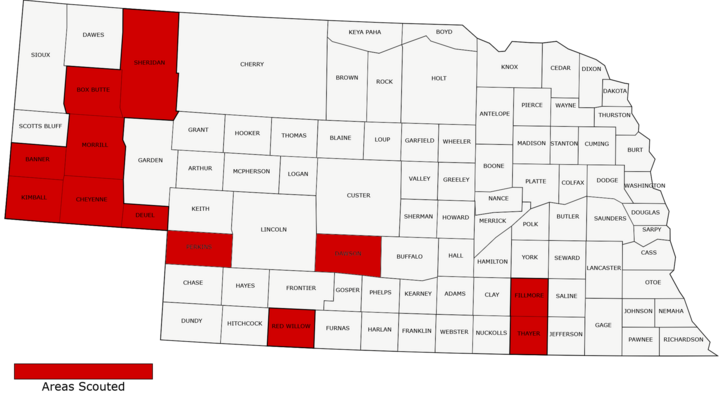
Panhandle Observations
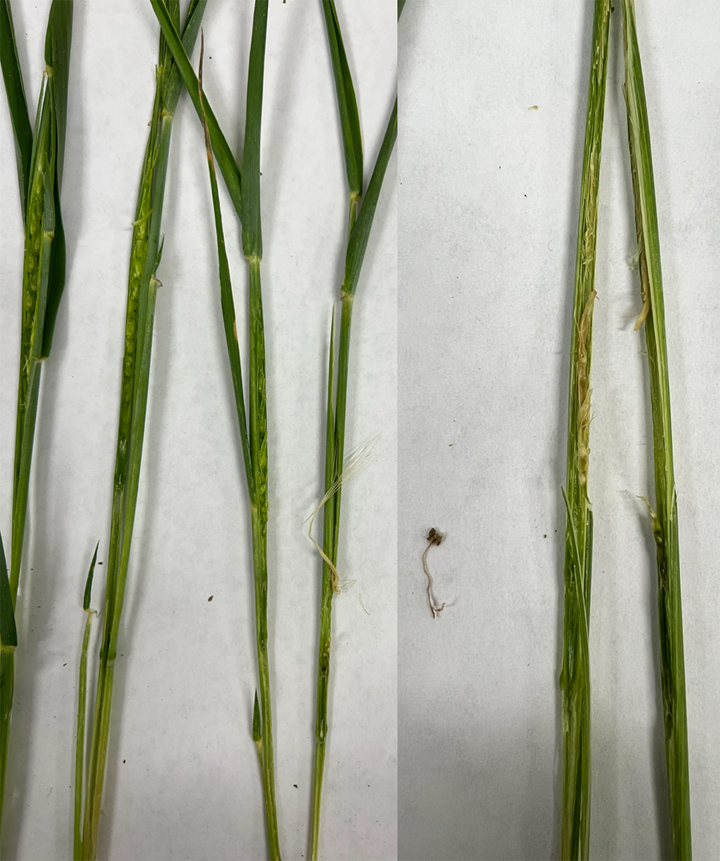
Split stems from Cheyenne County-High Plains Ag Lab showing mix of heads that seem unaffected (left) and close up of head in boot stage showing yellowing and necrosis (right).
Photo and sample: Vini Zuppa/Nebraska Extension
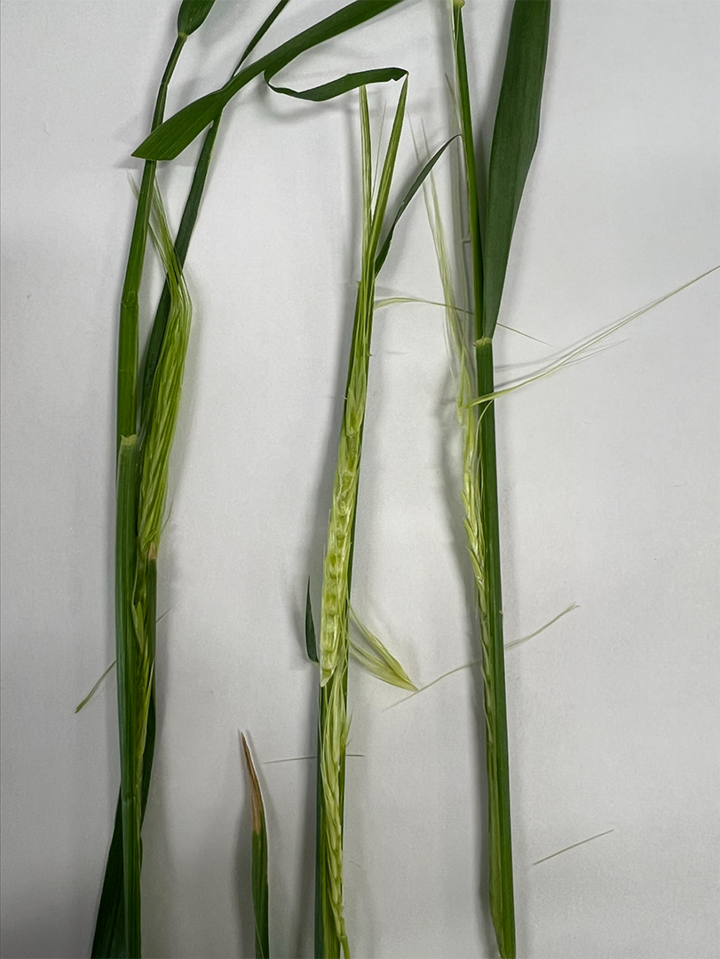
Split stems from Sheridan County appearing to show early head damage from frost.
Sample: John Thomas/Nebraska Extension; Photo: Vini Zuppa/Nebraska Extension
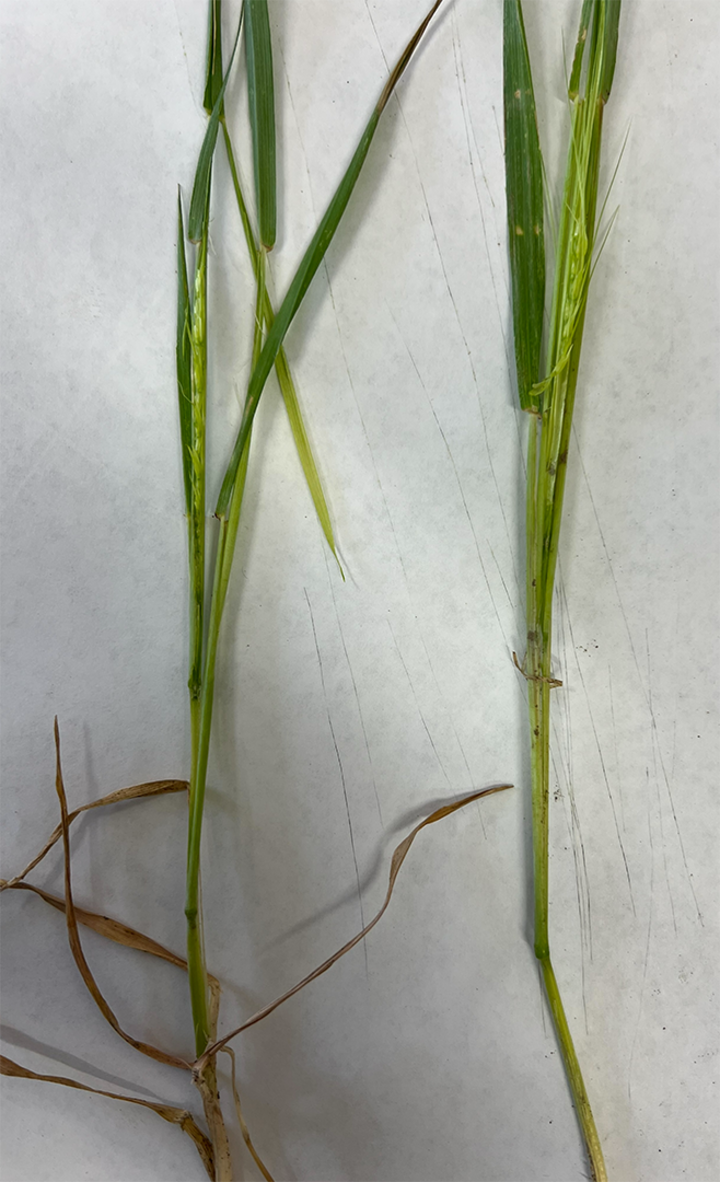
Split stems from Deuel County showing heads that seem unaffected by the first freeze but may not exhibit symptoms from April 29 yet.
Photo and sample: Vini Zuppa/Nebraska Extension
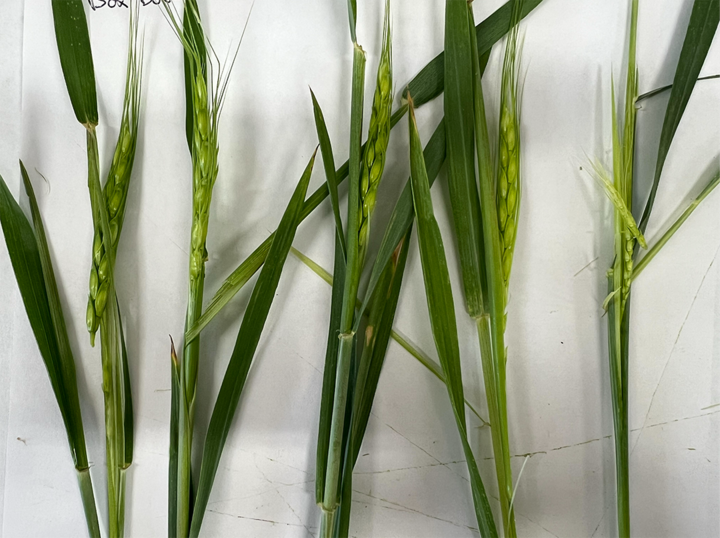
Split stems from irrigated field in Box Butte County that show little to no freeze damage at this point, though other reports from growers indicate that early maturing varieties and dryland fields are already showing head discoloration.
Sample: John Thomas/Nebraska Extension; Photo: Vini Zuppa/Nebraska Extension.
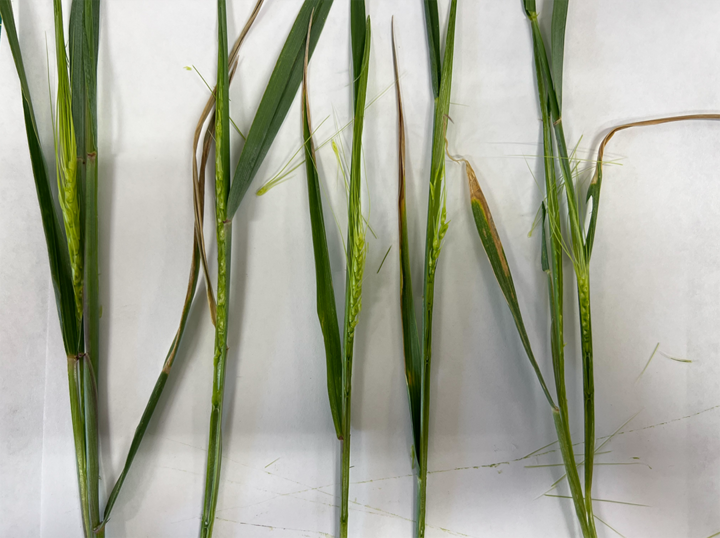
Split stems from Morrill County with some freeze-impacted leaf tips, but little head damage at this point.
Sample: John Thomas/Nebraska Extension; Photo: Vini Zuppa/Nebraska Extension
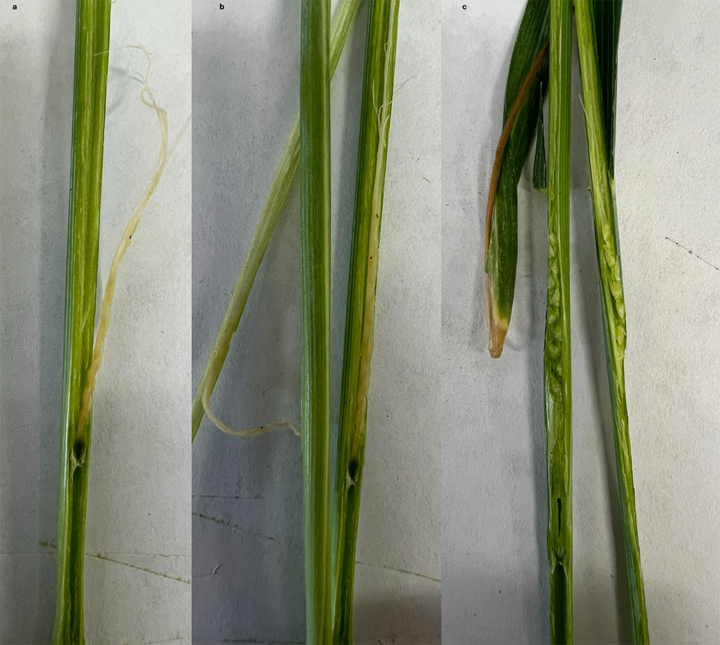
Split stems from southern Cheyenne County. Panels a and b were planted into corn fallow and had lower stand and freeze damage, whereas panel b is the same variety with possible leaf impacts but heads unaffected coming from a field of millet fallow.
Photo and sample: Vini Zuppa/Nebraska Extension
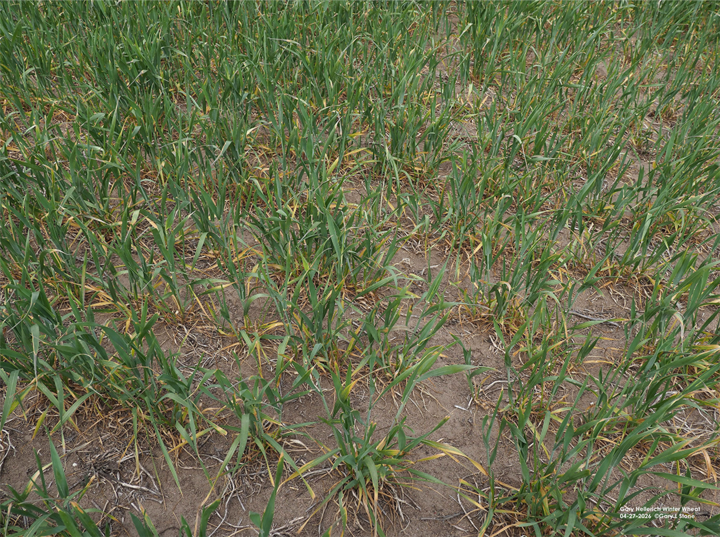
Wheat field in western Banner County showing what may be freeze damage and/or drought stress but is difficult to determine yet.
Photo: Gary Stone/Nebraska Extension
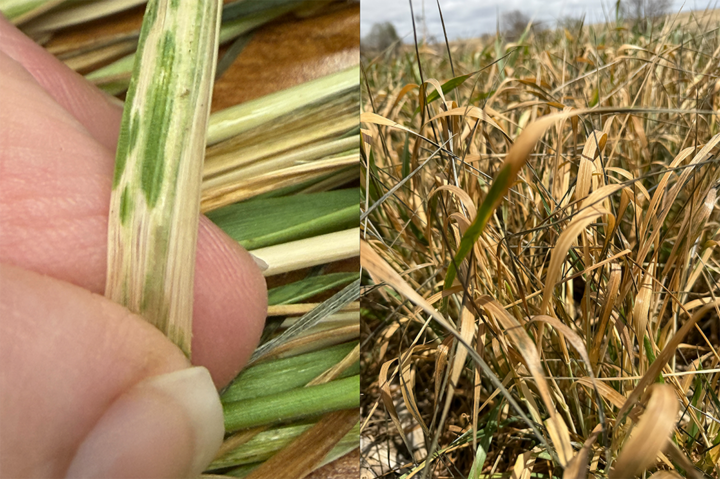
Close-up photo of freeze damage on leaves in Red Willow County (left). Surrounding field shows significant browning of leaves (right) from the tips on all tillers. Freeze damage can sometimes be differentiated from burning due to drought that is more often localized near the crown versus here where it is seen more uniformly.
Photos: Ruby Collins
Southern Observations
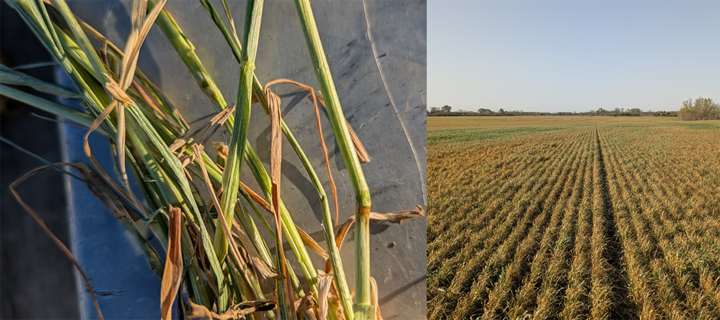
Wheat showing necrotic nodes and wilted leaves from Fillmore County (left) and surrounding field (right). Node and stem necrosis were exacerbated by significant drought stress and shallow rooting depth when planted after soybeans.
Photos: Jenny Brhel
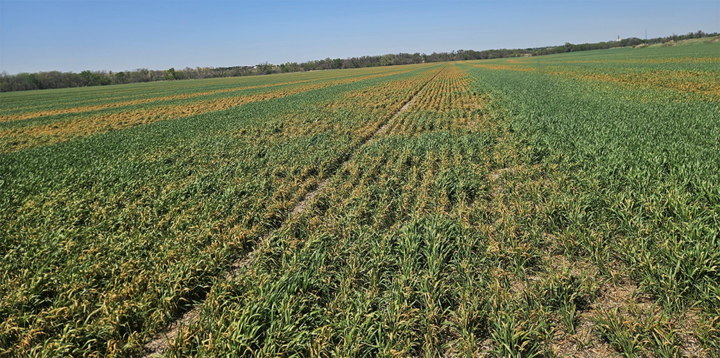
Wheat field near Hebron in Thayer County with freeze damage potentially attributed to strips of high residue within the field versus strips without as much residue that had reduced cooling effects.
Photo: David Wangila