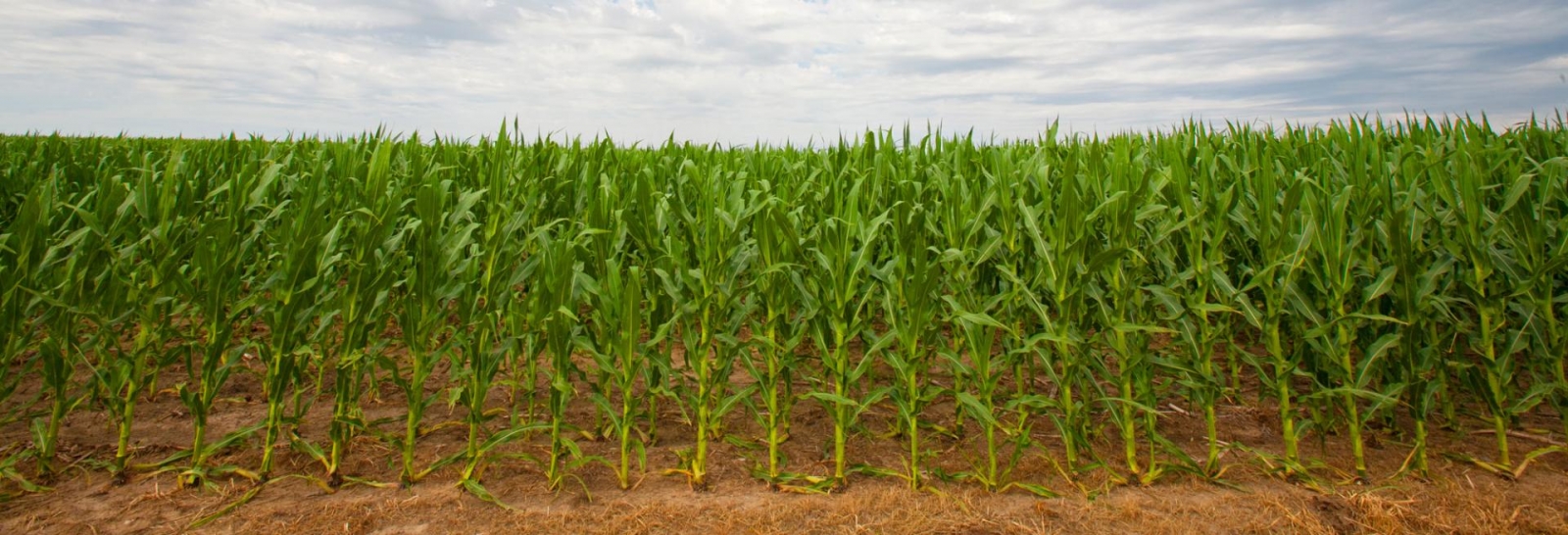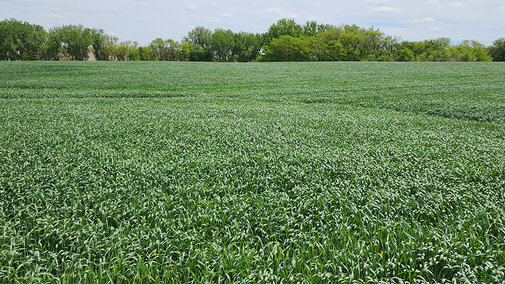
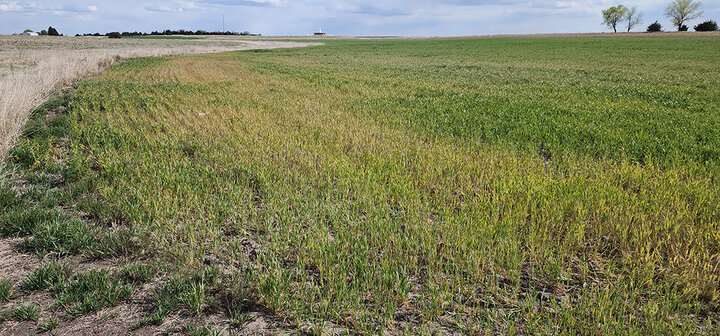
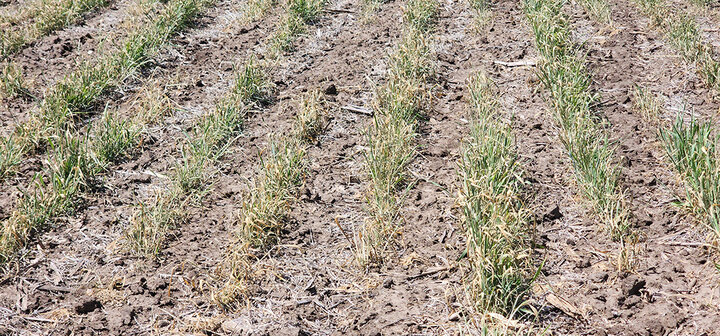
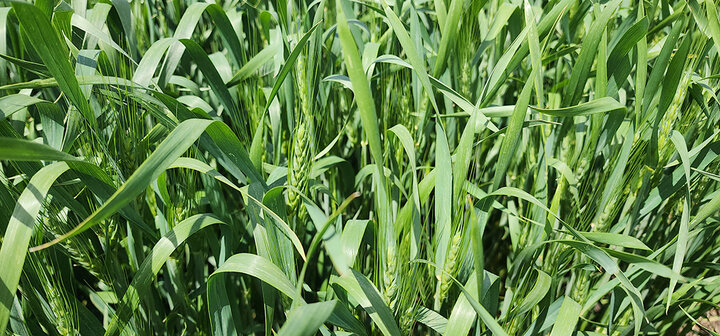
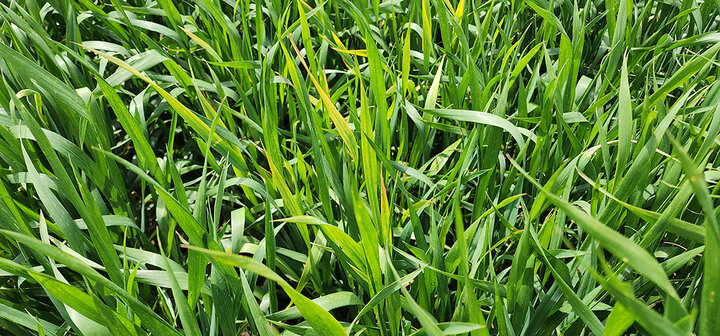
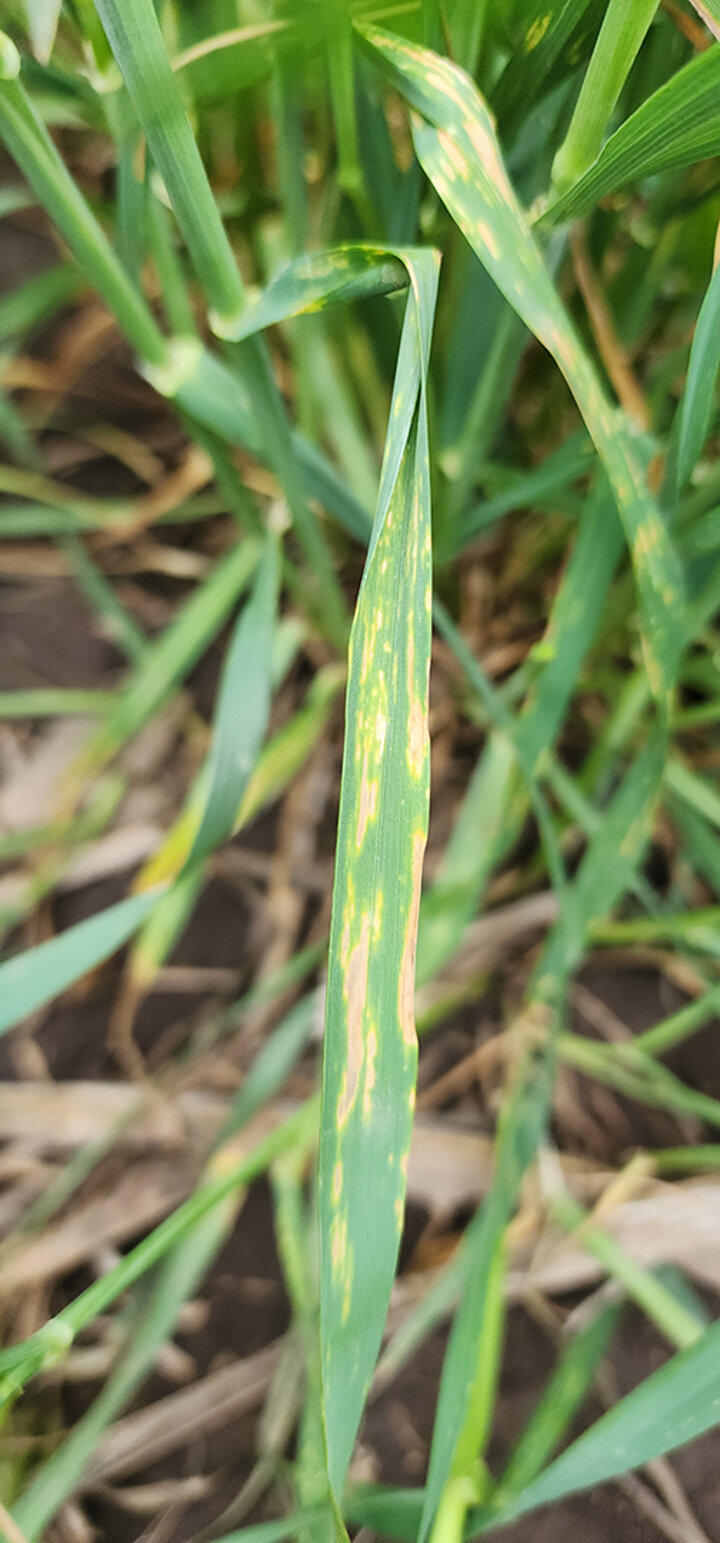
Visits to wheat and rye fields in April and May in Jefferson, Kearney, Lancaster, Lincoln and Saunders Counties revealed varying degrees of disease and freeze injury from trace (Figure 1) to severe (Figures 2 and 3).
Growth stage in wheat fields ranged from boot to heading (Figure 4) on May 5 and 6.
The predominant and most widespread disease observed was barley yellow dwarf (Figure 5). Fungal leaf spot diseases (Septoria tritici blotch, tan spot, Figure 6) were also observed, but at trace to low levels. No rust diseases were observed.
Management
Barley yellow dwarf cannot be controlled once it occurs. Insecticide sprays to control aphids — the vectors of barley yellow dwarf virus — can reduce disease incidence and spread, but this strategy is effective only if the aphid species present in the field are known to be good vectors of the virus. Insecticide seed treatments can reduce spread of the virus by killing the aphid vectors. Disease incidence can be reduced by delaying planting of winter wheat and early planting of spring wheat. Planting resistant varieties is an effective strategy, but many commonly grown varieties are susceptible.
The recent disease surveys showed only trace to low levels of foliar fungal diseases. Dry weather has kept the levels of leaf spot diseases low and rust diseases have not been observed. Apply a fungicide to protect the flag leaf only if disease favorable environmental conditions (rain, irrigation) are present in the field.
Wheat is approaching heading or is already heading in eastern Nebraska. The Fusarium risk assessment tool is showing mostly a low risk for development of Fusarium head blight. If high risk environmental conditions (continuous heavy rainfall or irrigation) occur before and during flowering, a fungicide application at early flowering is recommended.
Nothing can be done to alleviate damage to wheat that has been caused by freeze injury. A recently updated CropWatch article, “Assessing Freeze Injury to Wheat,” highlights information on growth stage, approximate injurious temperature, primary symptoms, and the expected effect on yield caused by freeze injury.