Frost Seeding or Interseeding Legumes
Are you looking to increase production from pastures or hay fields? Frost seeding or interseeding legumes might just work in your operation.
Nitrogen is one of the key ingredients for productive pastures. A way to get more nitrogen in a pasture is to plant legumes. Alfalfa, red or white clovers, birdsfoot trefoil and other legumes all fix atmospheric nitrogen and can reduce nitrogen costs. These legumes are also very high in forage quality.
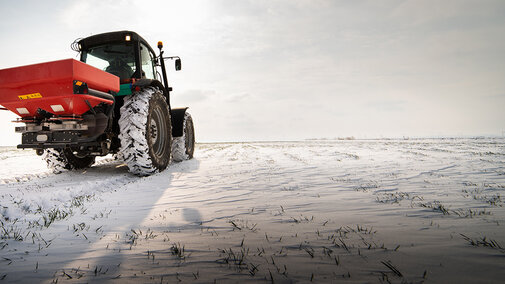
Not all pastures are good candidates for adding legumes, however. First, legumes need adequate phosphorus and a pH usually above 6, while some prefer a pH closer to 7. Frost seeding is a method where legume seed is simply broadcast in winter to allow the natural freezing and thawing of the ground to plant the seed for you. Because frost seeding requires seed to be close to the soil surface after broadcasting, snow-free or very little snow is preferred. Frost seeding success can vary and while frost seeding is easier to do, drilling is almost always a better option if the pasture conditions allow it. Interseeding with a no-till drill better ensures seed placement and seed to soil contact.
Lastly, heavy flash grazing several times in the spring will reduce the competition from existing grasses and help establishment of legume seedlings. Once the grass is 3 to 4 inches taller than the seedlings, graze quickly until the grass is grazed down to the height of the legume seedlings.
Legumes can help reduce fertilizer cost and create higher quality pastures and hay. Frost seeding or no-till drill interseeding are two approaches that might work to establish legumes in your operation.
Winter Hay Worries
Grass tetany and nitrate poisoning are issues that we typically associate with animals grazing. However, both issues can be a problem in winter when animal diets are limited by what they are fed. Is your herd safe from possible hay worries?
Tetany occurs when an animal’s diet doesn’t have enough magnesium to meet nutritional needs. Complications with milk production and increased magnesium demand can make this imbalance even worse during lactation.
Grass, alfalfa and cereal grains harvested for hay can all be low in magnesium. Getting a hay test with mineral analysis can easily show if this is an issue we need to worry about. If tests come back showing less than 0.15% magnesium, the hay is deficient. Other mineral interactions that can worsen tetany are low calcium (<0.40%) and high in potassium (>2.5%).
If your test comes back with issues, consider switching over to a high calcium and magnesium mineral. Most options use magnesium oxide, which is bitter tasting and can reduce animal consumption. Consider mixing with a protein or energy supplement or mixing with distillers grain or soybean meal to improve consumption if it’s not at target levels (for a 10-13% magnesium mix, this is 4 oz. per head).
Another concern to keep an eye on is nitrates. Forages high in nitrate that were harvested for hay will not see a significant reduction in nitrate levels after curing. Any hay that we suspect being high in nitrate should be tested and if high, fed as a reduced portion of the diet to prevent an issue with toxicity.
Tetany and nitrates in the winter aren’t problems that often jump right to a producer’s mind, but they can be a serious issue, especially when an animal’s diet is limited to what they are fed. Properly testing hay and adjusting mineral and diets to minimize risk can keep your winter hay worries at bay.