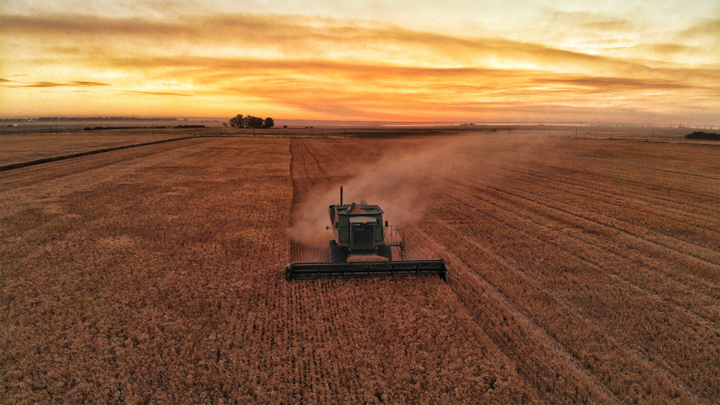
Persistent dry conditions further reduced Nebraska's soil moisture supplies during the week ending July 26, even as favorable fieldwork conditions allowed winter wheat and oat harvest to surge ahead of average. Corn and soybean development remained near or ahead of normal despite worsening moisture conditions.
Nebraska farmers had 6.1 days suitable for fieldwork during the week. Topsoil moisture supplies rated 30% very short, 42% short, 27% adequate and 1% surplus, while subsoil moisture rated 34% very short, 38% short, 28% adequate and 0% surplus.
Field Crops Report:
Corn
- Silking: 79% — ahead of 73% last year and near 80% for the five-year average.
- Dough: 18% — near 19% last year and 19% for the five-year average.
- Condition: 3% very poor, 9% poor, 28% fair, 46% good, 14% excellent.
Soybean
- Blooming: 85% — ahead of 71% last year and 80% for the five-year average.
- Setting Pods: 39% — ahead of 27% last year but behind 42% for the five-year average.
- Condition: 2% very poor, 7% poor, 30% fair, 49% good, 12% excellent.
Sorghum
- Headed: 25% — behind 34% last year and 27% for the five-year average.
- Coloring: 3% — ahead of 1% last year and 1% for the five-year average.
- Condition: 1% very poor, 14% poor, 44% fair, 37% good, 4% excellent.
Winter Wheat
- Harvest: 92% — well ahead of 74% last year and 80% for the five-year average.
Oats
- Harvested: 78% — well ahead of 58% last year and 63% for the five-year average.
- Condition: 14% very poor, 38% poor, 36% fair, 11% good, 1% excellent.
Pasture and Range:
- Condition: 41% very poor, 25% poor, 25% fair, 9% good, 0% excellent.
Data for this news release were provided at the county level by USDA Farm Service Agency, Nebraska Extension, and other reporters across the state.