Final Hay Inventory
How much feed or hay do you have going into winter? Will you have enough feed to provide for current cattle numbers? An inventory now before winter hits full swing could be helpful.
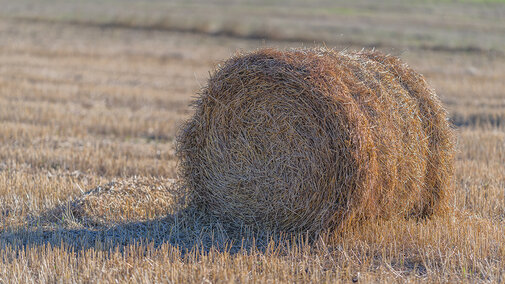
First, get a final idea of what is available. Count bales, measure silage, evaluate remaining fall and winter pasture, and estimate crop residue grazing opportunities. Consider best- and worst-case scenarios. While keeping an eye on the weather outlook is helpful, consider what happens if conditions turn cold and snowy and pasture or residue grazing won’t be as effective.
We also need to get an idea of how many animals need to be fed and what quality that feed needs to be. Keeping May calving cows through the winter is different than growing stockers. Factor storage and feeding losses into your planning as well. Silage uncovered outside or improperly stored hay can easily have over 25% dry matter losses in storage. How you feed will also add to the amount of loss you can expect.
After we make a final assessment, it’s time to plan. Some may have too much feed laying around that is getting old. Selling some may generate a premium. If we come up short, consider options. Do you have the fixability to sell off some animals if feed is getting tight or do we need to pad our reserves? If so, is buying feeds that are cheaper now and storing them through the winter a possibility? Or do we roll the dice on needing to purchase later when availability is lower and costs might jump?
Planning is indispensable. Having a feed inventory and checking prices and availability now will go a long way to reducing the anxiety of what we will feed our cows this winter.
1099s for 2025 Taxes: What Are They and Who Needs to Fill Them Out?
It’s that time of year again — time when we close the prior year’s books and finalize tax reporting. Most of us probably know that farmers and ranchers’ last day to file taxes is April 15.
Farmers and ranchers often pay for services from individuals who are not full-time employees, such as independent contractors, self-employed workers or landowners. According to IRS regulations, a 1099 form must be issued to non-employees who are paid over $600 in a calendar year (this will be changing in the 2026 tax year to $2,000). This ensures the recipient reports the income for tax purposes.
Detailed farm and ranch records assist in identifying amounts and to whom special IRS forms must be prepared for.
The 1099-MISC form is an example of a filing requirement that should not be overlooked. Paying an individual, or in some cases an LLC or corporation, a total of $600 or more for rent, services or interest during the year triggers the filing requirement. Generally, it is an individual or an LLC that is not exempt as a corporation that would need to receive a 1099 (which they must receive by Jan. 31); however, in the case of veterinary services or when paying legal fees to an attorney that is part of a corporation, a 1099 is necessary. These forms must be sent early in the year to allow recipients adequate time for tax preparation.
Form 1099-Misc is one of the most common 1099 forms used in agriculture. Some other 1099 forms are Form 1099-INT, which is used to report interest payments over $600, such as on business loans. Form 1099-C is used for the cancellation of debt, which must be reported as taxable income by the debtor.
Producers can order these forms from the IRS website. For specific questions about 1099 requirements, consulting a tax advisor or attorney is recommended.