The USDA Farm Service Agency (FSA) has designated numerous Nebraska counties as primary natural disaster areas due to August 2025 storms. This designation opens the door for eligible producers in those counties — and surrounding ones — to apply for emergency loans to help recover from production and physical losses.
Emergency loans can help producers replace essential equipment or livestock, reorganize operations, or refinance certain debts. Loan approval depends on the extent of losses, available security, and repayment ability.
According to USDA, these areas experienced severe storms, straight-line winds, and flooding Aug. 8-10, 2025.
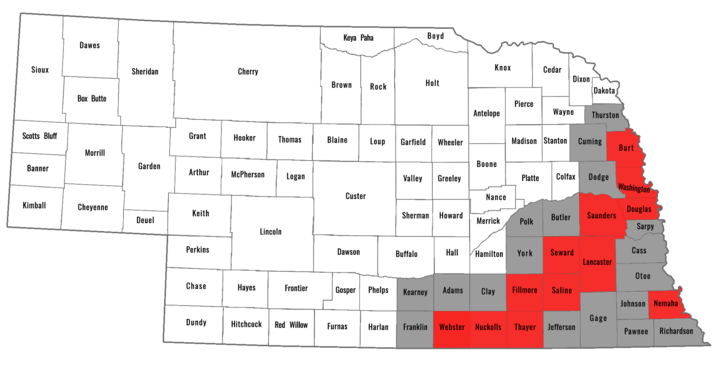
Application deadline for the following counties is June 22, 2026:
Primary counties: Burt, Douglas, Fillmore, Lancaster, Nemaha, Nuckolls, Saline, Saunders, Seward, Thayer, Washington, Webster
Contiguous counties also eligible: Adams, Butler, Cass, Clay, Cuming, Dodge, Franklin, Gage, Jefferson, Johnson, Kearney, Otoe, Pawnee, Polk, Richardson, Sarpy, Thurston, York
- Iowa: Harrison, Monona, Pottawattamie
- Kansas: Jewell, Republic, Smith, Washington
- Missouri: Atchison, Holt
More Resources
On farmers.gov, the Disaster Assistance Discovery Tool, Disaster Assistance-at-a-Glance fact sheet, and Loan Assistance Tool can help you determine program or loan options. To file a Notice of Loss or to ask questions about available programs, contact your local USDA Service Center.