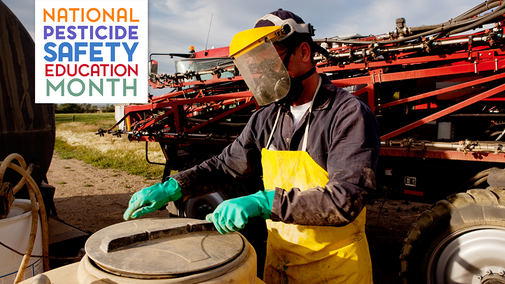
February is National Pesticide Safety Education Month — a timely reminder to prepare for the busy season and reinforce the habits that protect people, livestock, pollinators and water resources.
In Nebraska, pesticides are used in many settings, including row crops, pasture and rangeland, lawns and landscapes, rights of way, grain handling, and structural pest control. Because their use is so widespread, small daily decisions can quickly add up — for better or worse.
Pesticide safety education is more than a regulatory requirement. It helps prevent issues we see every year, including off-target movement that injures neighboring crops, exposure incidents affecting workers and families, and contamination that reaches wells or surface water. With thoughtful planning and consistent practices, most of these problems can be avoided.
Conditions Can Raise the Risk
Once we move past Nebraska’s “false springs,” fieldwork often happens in narrow weather windows — and conditions do not always cooperate.
Wind is one of the biggest challenges for safe application and can shift quickly. Temperature inversions are another concern, especially on cool, still mornings or evenings. During an inversion, fine droplets can remain suspended and travel farther than expected, even when wind speeds appear acceptable. Recognizing when conditions are not right is essential to protecting neighbors, sensitive sites and the environment.
What Pesticide Safety Education Protects
Good safety practices extend well beyond the applicator — they protect communities and shared resources.
- People and families: Many exposure incidents involve skin contact or contaminated clothing. Proper PPE, clean-up routines and safe storage reduce risk.
- Neighbors and bystanders: Off-target movement can damage gardens, shelterbelts, trees and sensitive crops — and create lasting conflicts.
- Pollinators and beneficial insects: Warm days can bring early activity. Timing, product selection and drift control matter.
- Water and wells: Private wells are common in Nebraska. Backflow prevention, careful mixing and loading, and spill preparedness help safeguard water supplies.
- Your bottom line: Misapplications waste product and time. Drift or crop injury can result in complaints, reapplications and added costs.
Learn more through Nebraska’s Pesticide Safety Education Program, which offers NebGuides on laws and regulations, health and safety, environmental protection and pest management.
How knowledgeable are you about basic pesticide safety principles?
Take the online quiz to find out.
For more information on using pesticides safely, visit the Pesticide Environmental Stewardship website. You can visit the links below and choose from a wide variety of topics: