Key Takeaways
Residual herbicides don't behave the same in every field. Soil texture, organic matter and pH all influence herbicide performance.
More isn't always better. Herbicide rates are adjusted for soil conditions because clay and organic matter can bind herbicides and reduce their effectiveness.
Know your soil pH before choosing products. Soil pH can affect herbicide activity, crop safety and rotational crop restrictions, particularly for atrazine, isoxaflutole and several Group 2 herbicides.
Read both your soil test and the label. Matching herbicide selection and rates to your field conditions is essential for effective, safe weed control.
Why do the same herbicides perform differently from one field to another? The answer often comes down to soil properties and weather conditions.
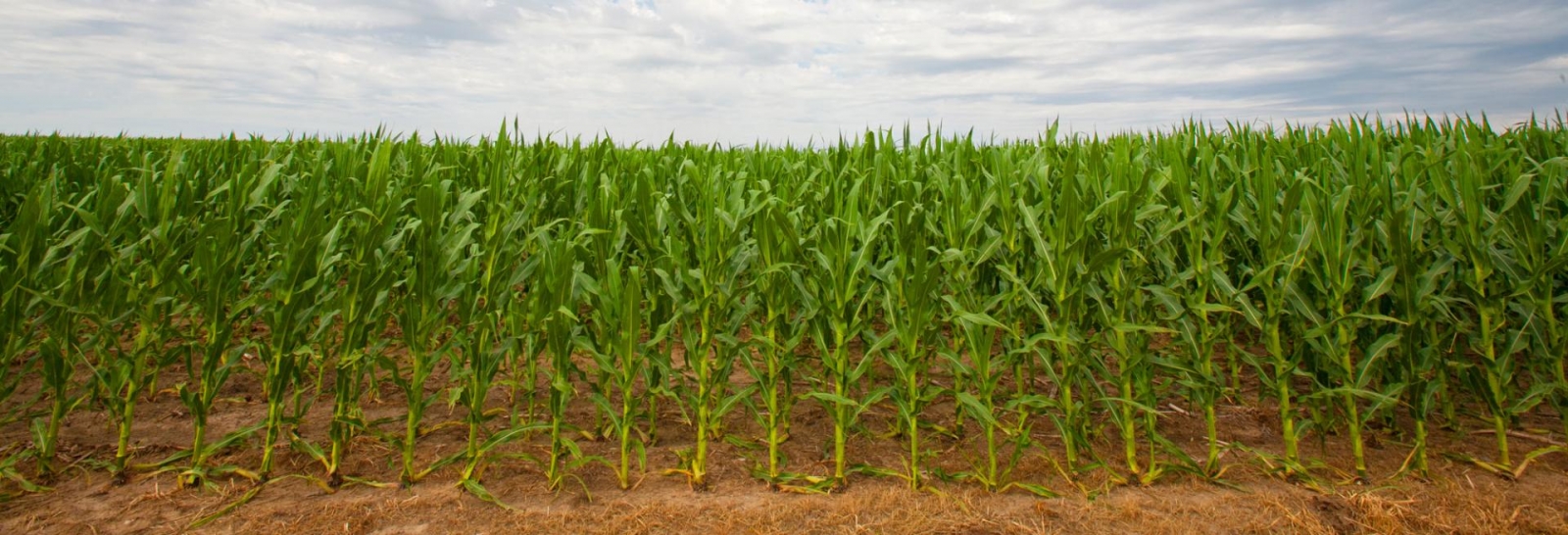
Soil-applied residual herbicides — also known as pre-emergence herbicides — are a cornerstone of integrated weed management in corn production fields (Figure 1). By controlling weeds as they germinate, residual herbicides reduce early-season crop–weed competition, protect yield through the critical weed-free period, and widen the window for post-emergence herbicide applications.
Yet a residual herbicide's performance depends on more than the herbicide itself. To control germinating weeds, the herbicide must remain available in the soil long enough to reach emerging seedlings at an effective concentration. This means both weed control and crop safety depend on soil and environmental factors: soil texture, organic matter, cation exchange capacity (CEC, a measure of a soil's ability to hold nutrients), moisture, microbial activity, temperature, and the timing of the rainfall or irrigation that fully activates residual herbicide.
Much of the difference in herbicide performance is due to adsorption — the binding of herbicide molecules to tiny clay and organic matter particles (called colloids). After application, a portion of herbicide binds to soil particles where weeds cannot absorb it, while the rest remains dissolved in the soil solution where it can control emerging seedlings.
Soils higher in organic matter or clay carry more binding sites, tie up a larger share of the applied herbicide, and leave less in solution. This is exactly why the corn herbicide rate recommendations in Table 1 increase as organic matter and clay content increase — a higher rate offsets greater adsorption while staying within label limits.
On coarse, low-organic-matter soils, the opposite holds — less herbicide is bound, more stays available, and the risk of crop injury and leaching rises, which is why several corn products carry explicit low-rate or “do-not-use” cautions on sandy, low-organic matter soils.
Soil pH is another important factor that’s easy to overlook when selecting an herbicide. It directly influences how many residual herbicides behave once they are in the soil. For weak-acid herbicides (chemicals whose behavior changes depending on soil pH), pH sets the balance between neutral and ionized molecules, which in turn governs how tightly the herbicide binds, how soluble and mobile it is, and how long it persists. The same product can therefore deliver different weed control, crop safety, and rotational carryover (herbicide remaining active long enough to affect the next crop) on an acidic, neutral or alkaline soil.
In corn, the triazines are the textbook case. Atrazine and related triazines bind more tightly as pH falls. More of the herbicide is tied up in acidic soils, leaving less available for weed control. As pH rises, more of the herbicide remains available for weed control, sharpening early activity but also raising the risk of crop injury to sensitive rotational crops.
Several other corn chemistries are pH sensitive as well. Isoxaflutole premixes (Balance Flexx, Corvus, TriVolt) become more available in high-pH, coarse, low-organic matter soils, increasing the risk of crop injury, and carry rate reductions above roughly pH 7.5.
The Group 2 components built into many corn premixes (thiencarbazone in Corvus and TriVolt; flumetsulam and clopyralid in Hornet and SureStart II/TripleFlex II) tend to persist longer and injure at high pH, and some also warn of reduced weed control on strongly acidic, high-organic matter soils.
Many modern corn premixes combine two or three active ingredients that each respond differently to soil pH. Because these products often include 4-hydroxyphenylpyruvate dioxygenase (HPPD, Group 27) and chloroacetamide (Group 15) herbicides, understanding your soil pH alongside texture and organic matter becomes even more important.
These differences are especially important in Nebraska, where soil pH and texture can vary dramatically from acidic soils in the eastern region to calcareous, high-pH soils in central and western Nebraska, often shifting in a single field.
Sound product selection means considering soil pH alongside texture and organic matter.
Table 1 reproduces the soil-texture– and organic-matter–adjusted rates published for corn on pages 106–107 of Nebraska Extension NebGuide EC130, “Guide for Weed, Disease, and Insect Management in Nebraska.”
Table 2 summarizes the soil-pH restrictions and cautions stated on product labels. The information here does not replace the label — always read and follow the current product label before making final decisions.
How to Use the Tables
- Start from your field's most recent soil-test pH, texture, and organic-matter level.
- Use Table 1 to set the product rate for your soil — rates climb from coarse, low-organic matter soils toward fine-textured, higher-organic matter soils.
- Then check Table 2. Read each product's Critical Soil pH, then review At Application, which provides recommendations for this season (a hard cutoff, a rate cap, or a control concern), and Plant-Back/Carryover, which indicates whether pH may lengthen next year's rotational interval.
- “No pH restriction noted” means the label sets no specific limit — it is not a guarantee of crop safety.
- Active ingredients and WSSA groups in Table 2 are provided as a quick reference. Confirm them against the current product label.
| Product | Sandy loam (< 1% OM) | Silt loam (1–2% OM) | Silty clay loam (> 2% OM) |
|---|---|---|---|
| Acuron / Acuron Flexi | 2.0 qt | 2.5 qt | 2.5 qt |
| Anthem Maxx | 4 oz | 4–5 oz | 4.5 oz |
| Anthem Flex | 3 oz | 4–5 oz | 6–7 oz |
| Balance Flexx + Atrazine | Balance Flexx 2.0–3.0 oz + Atrazine DF 1.0 lb | 3–5 oz + 1.3 lb | 3–6 oz + 1.5 lb |
| Bicep II Magnum | 1.8 qt | 1.8–2.1 qt | 2.1 qt |
| Bicep Lite II Magnum | 1.0 qt | 1.1–1.6 qt | 1.6 qt |
| Calibra | 2.0 qt | 2.0 qt | 2.0 qt |
| Callisto | 6.0 oz | 6.0 oz | 6.0 oz |
| Corvus + Atrazine | Corvus 3.33 oz + Atrazine 1.0 lb | 3.33–5.6 oz + 1.0 lb | 3.33–5.6 oz + 1.0 lb |
| Degree Xtra / Fultime NXT | 2.7 qt | 3.5 qt | 3.5 qt |
| Dual II Magnum | 1.0 pt | 1.3 pt | 1.7 pt |
| Dual IIG Magnum (granular) | 6.0–8.0 lb | 8.0–10.0 lb | 10.0–12.0 lb |
| Dual II Magnum + Atrazine | Dual II Magnum 1.0 pt + Atrazine DF 1.1 lb | 1.3 pt + 1.4 lb | 1.3 pt + 1.8 lb |
| Expert | 2.5 qt | 3.0 qt | 3.75 qt |
| FulTime NXT | 2.5–2.7 qt | 2.7–3.3 qt | 3.0–3.5 qt |
| Harness Max | 2 qt | 2.5 qt | 2.7 qt |
| Harness Xtra / Keystone LA NXT | 1.8 qt | 1.8–2.3 qt | 2.0–2.3 qt |
| Harness Xtra 5.6L / Confidence Xtra 5.6L | 1.4 qt | 1.7–2.4 qt | 2.3–2.6 qt |
| Hornet | 4.0 oz | 4.0 oz | 4.0–5.0 oz |
| Lexar EZ | 3.0 qt | 3.0 qt | 3.0 qt |
| Lumax EZ | 2.7 qt | 2.7 qt | 2.7–3.25 qt |
| Maverick | 18 oz | 18–32 oz | 18–32 oz |
| Outlook | 10–16 oz | 14–21 oz | 14–21 oz |
| Perpetuo | 6 oz | 6–8 oz | 6–10 oz |
| Prowl H₂O + Atrazine | Do not use | Prowl H₂O 1.8 qt + Atrazine DF 1.33 lb | 1.8 qt + 1.77 lb |
| Resicore REV | 2.25 qt | 2.50 qt | 2.75 qt |
| Sharpen | 2.0 oz | 2.5 oz | 3.0 oz |
| Storen | 2.1 qt | 2.4 qt | 2.4 qt |
| SureStart II / TripleFlex II | 1.5 pt | 1.5–1.75 pt | 2.0–3.0 pt |
| Surpass | 1.5–2.25 qt | 1.5–2.5 qt | 1.5–2.75 qt |
| TriVolt | 10 oz | 15 oz | 20 oz |
| Verdict | 10.0–12.0 oz | 13.0–15.0 oz | 16.0–18.0 oz |
| Vida | 0.5–2.0 fl oz | 0.5–2.0 fl oz | 0.5–2.0 fl oz |
| Zidua SC | 1.5–2.75 oz | 2.5–5 oz | 3.25–6.5 oz |
Table Notes: Rates are commercial product per acre applied broadcast, transcribed from the Guide for Weed, Disease, and Insect Management in Nebraska (pages 106–107).
Soil classes follow the Guide: sandy loam < 1% organic matter (OM), silt loam 1–2% OM, silty clay loam > 2% OM; recommended rates increase with OM and clay content to offset greater herbicide adsorption.
Confirm units (fluid vs. dry ounces) and application rates on the current label.
Atrazine restrictions: Do not apply within 66 feet of where field runoff enters surface water; total atrazine ≤ 2.5 lb ai/A per calendar year (≤ 1.6 lb ai/A on highly erodible land with < 30% residue); atrazine on soils < 1% OM increases carryover risk to sensitive rotational crops, especially at high pH.
| Product | Active ingredient (WSSA1 group) | Critical soil pH | At application | Plant-back/carryover |
|---|---|---|---|---|
| Acuron / Acuron Flexi | Acuron: bicyclopyrone + mesotrione + S-metolachlor + atrazine (Gp 27/15/5). Acuron Flexi: same, no atrazine | Rotation only | No application pH limit noted | W of US-83 under pivot, pH > 6.5: dry beans 10 mo (else longer) |
| Anthem Maxx / Anthem Flex | pyroxasulfone + fluthiacet-methyl (Gp 15 + 14) | None noted | No pH restriction noted | — |
| Balance Flexx + Atrazine | isoxaflutole (Gp 27) + atrazine (Gp 5) | Alkaline / high pH | ↑ injury on coarse, low-OM, or alkaline/calcareous soils | — |
| Bicep II Magnum | S-metolachlor + atrazine (Gp 15 + 5) | > 8.0 | Avoid highly alkaline (pH > 8.0) / exposed calcareous subsoil; do not use > 8.0 if planting grain sorghum | — |
| Bicep Lite II Magnum | S-metolachlor + atrazine (Gp 15 + 5) | > 8.0 | Avoid highly alkaline (pH > 8.0) / exposed calcareous subsoil; do not use > 8.0 if planting grain sorghum | — |
| Calibra | S-metolachlor + mesotrione (Gp 15 + 27) | Rotation only | No application pH limit noted | W of US-83 under pivot, pH > 6.5: dry beans 10 mo (else 18 mo) |
| Callisto | mesotrione (Gp 27) | Rotation only | No application pH limit noted | Rotational crops require pH ≥ 6 (plus other criteria) |
| Corvus + Atrazine | isoxaflutole + thiencarbazone-methyl (Gp 27 + 2) + atrazine (Gp 5) | ≥ 7.5 | pH ≥ 7.5 & OM ≤ 2%: reduce rate 0.5 fl oz; ↑ injury on coarse/alkaline spots | pH ≥ 7.5: extend to 17 mo (24 mo some crops) |
| Degree Xtra / Fultime NXT | acetochlor + atrazine (Gp 15 + 5) | None specified | No specific threshold; see component labels | — |
| Dual II Magnum / Dual IIG Magnum | S-metolachlor (Gp 15) | None noted | No specific pH threshold (S-metolachlor alone) | — |
| Dual II Magnum + Atrazine | S-metolachlor + atrazine (Gp 15 + 5) | None specified | No specific threshold; atrazine carryover ↑ on alkaline soils | — |
| Expert | glyphosate + S-metolachlor + atrazine (Gp 9/15/5) | > 8.0 | Do not apply on highly alkaline (pH > 8.0) / exposed calcareous subsoil | — |
| FulTime NXT | acetochlor + atrazine (Gp 15 + 5) | None noted | No pH restriction noted | — |
| Harness Max | acetochlor + mesotrione (Gp 15 + 27) | None specified | No specific threshold; see component labels | — |
| Harness Xtra / Keystone LA NXT | acetochlor + atrazine (Gp 15 + 5) | None specified | No specific threshold; see component labels | — |
| Harness Xtra 5.6L / Confidence Xtra 5.6L | acetochlor + atrazine (Gp 15 + 5) | None specified | No specific threshold; see component labels | — |
| Hornet | flumetsulam + clopyralid (Gp 2 + 4) | > 7.8 (injury); < 5.9 (control) | Do not apply > 7.8 (injury). On > 5% OM soils, < 5.9 reduces control | — |
| Lexar EZ | S-metolachlor + atrazine + mesotrione (Gp 15/5/27) | None noted | No pH restriction noted | — |
| Lumax EZ | S-metolachlor + atrazine + mesotrione (Gp 15/5/27) | Rotation only | No application pH limit noted | W of Hwy 83 under pivot, pH > 6.5: dry beans 10 mo |
| Maverick | mesotrione + clopyralid + pyroxasulfone (Gp 27 + 4 + 15) | None noted | No pH restriction noted | — |
| Outlook | dimethenamid-P (Gp 15) | None noted | No pH restriction noted | — |
| Perpetuo | flumiclorac + pyroxasulfone (Gp 14 + 15) | None noted | No pH restriction noted | — |
| Prowl H₂O + Atrazine | pendimethalin (Gp 3) + atrazine (Gp 5) | None specified | No specific threshold; stressed stands (incl. high/low pH) ↑ injury | — |
| Resicore REV | acetochlor + mesotrione + clopyralid (Gp 15/27/4) | None specified | No specific pH threshold (bioassay advised) | — |
| Sharpen | saflufenacil (Gp 14) | ≥ 7.8 (millet) | Do not apply to millet on pH ≥ 7.8; injury under stress (incl. high/low pH) | — |
| Storen | S-metolachlor + mesotrione + pyroxasulfone + bicyclopyrone (Gp 15/27) | Rotation only | No application pH limit noted | pH > 6.5 allows shorter intervals (alfalfa 10 mo; dry beans 11 mo W of US-83); else 18 mo |
| SureStart II / TripleFlex II | acetochlor + flumetsulam + clopyralid (Gp 15/2/4) | > 7.8 (injury); < 5.9 (control) | Do not apply > 7.8 (injury). On > 5% OM soils, < 5.9 reduces control | — |
| Surpass | acetochlor (Gp 15) | None noted | No pH restriction noted | — |
| TriVolt | isoxaflutole + thiencarbazone-methyl + flufenacet (Gp 27 + 2 + 15) | ≥ 7.5 | pH ≥ 7.5 & OM ≤ 2%: reduce rate 1.5 fl oz (min 10 fl oz coarse); ↑ injury on alkaline soils | pH ≥ 7.5: extend to 17 mo (24 mo some crops) |
| Verdict | saflufenacil + dimethenamid-P (Gp 14 + 15) | None specified | No specific threshold; injury under stress (incl. high pH) | — |
| Vida | pyraflufen-ethyl (Gp 14) | n/a (spray water) | Not a soil-pH limit — buffer spray water to ≤ 5.0 before adding | — |
| Zidua SC | pyroxasulfone (Gp 15) | > 7.5 | Avoid pH > 7.5 with low OM (injury) | — |
“None noted” / “No pH restriction noted” means the label states no specific pH limit and is not a guarantee of crop safety.
↑ = increased.
Always read and follow the current product label; this table does not replace label guidance.
1WSSA; Weed Science Society of America