Key Takeaways
Soil properties directly influence residual herbicide performance. Soil texture, organic matter, pH and cation exchange capacity all affect herbicide availability, weed control, crop safety and persistence.
Higher organic matter and clay often require higher labeled rates. These soils bind more herbicide, leaving less available in the soil solution, while coarse, low-organic matter soils may increase the risk of crop injury or leaching.
Soil pH can change both weed control and crop injury risk. Several commonly used soybean residual herbicides have pH restrictions or rate adjustments, making recent soil test results essential before application.
Use soil test information together with herbicide labels. Match product selection and application rates to your field's pH, texture and organic matter, and always follow current label directions.
A successful residual herbicide program begins long before weeds emerge — with selecting a product and rate that match your soil conditions.
Soil-applied residual (pre-emergence) herbicides are a cornerstone of integrated weed management in soybean production. By controlling weeds as they germinate, residual herbicides reduce early-season crop–weed competition and widen the application window for post-emergence herbicides. To control germinating weed seedlings, a residual herbicide must reach and remain in the soil solution at an effective concentration. Therefore, its efficacy and crop safety depend on several soil and environmental factors. Soil texture, organic matter content, cation exchange capacity (CEC), soil moisture, microbial activity, soil temperature, and the timing of rainfall activation all influence how much herbicide is available to control weeds and how long that control lasts.
At the center of these interactions is herbicide adsorption — the binding of herbicide molecules to tiny clay and organic matter particles (called colloids). After application, a portion of herbicide binds to soil particles where weeds cannot absorb it, while the rest remains dissolved in the soil solution where it can control emerging seedlings. Soils higher in organic matter or clay carry more binding sites, tie up a larger share of the applied herbicide, and leave less in solution. Consequently, university recommendations and herbicide label rate tables often increase application rates as organic matter and clay content increase, allowing growers to compensate for greater adsorption while remaining within labeled use rates.
In contrast, coarse-textured soils with low organic matter have fewer adsorption sites, resulting in more herbicide remaining in solution. While this can improve weed control, it also increases the potential for crop injury and herbicide leaching.
Soil pH is another important factor that’s easy to overlook when selecting an herbicide. It directly influences the behavior of many residual herbicides once they are in the soil. For many weak-acid herbicides, soil pH affects how much of the herbicide remains available in the soil solution, how easily it moves through the soil, and how long it persists. As a result, the same product may provide different levels of weed control, crop safety, and rotational carryover (when herbicide remains active long enough to affect the next crop), depending on whether it is applied to an acidic, neutral or alkaline soil.
Triazine and triazinone herbicides are classic examples. In soybean, the most important of these is metribuzin — the triazinone found in many premixes (e.g., Authority MTZ, Boundary, Canopy, Fierce MTZ, Panther PRO, Tendovo, etc.). Metribuzin becomes more available in the soil solution as pH rises, so on calcareous or high-pH soils — generally pH 7.5 or above — a greater share of the herbicide is free to be taken up by the crop, increasing the risk of crop injury. This is why metribuzin-containing labels restrict use, or cap the rate, on these soils.
Some other residual herbicides are similarly pH sensitive. Many Group 2 (ALS-inhibiting) herbicides, including products containing chlorimuron, imazethapyr, and imazaquin, also become more available and persistent as pH increases, raising the risk of crop injury and herbicide carryover. Sulfentrazone-based products (the “Authority” family) likewise become more available at high pH, and certain other residuals carry their own pH-related cautions.
These differences are especially important in Nebraska, where soil pH and texture can vary dramatically from acidic soils in the eastern region to calcareous, high-pH soils in central and western Nebraska, sometimes even within the same field.
Selecting residual herbicides and application rates requires considering soil pH, soil texture and organic matter together rather than relying on any single factor. For example, herbicide products containing chlorimuron-ethyl (e.g., Envive, Fierce XLT, Valor XLT) include soil pH restrictions on their labels for use in Nebraska (Table 1).
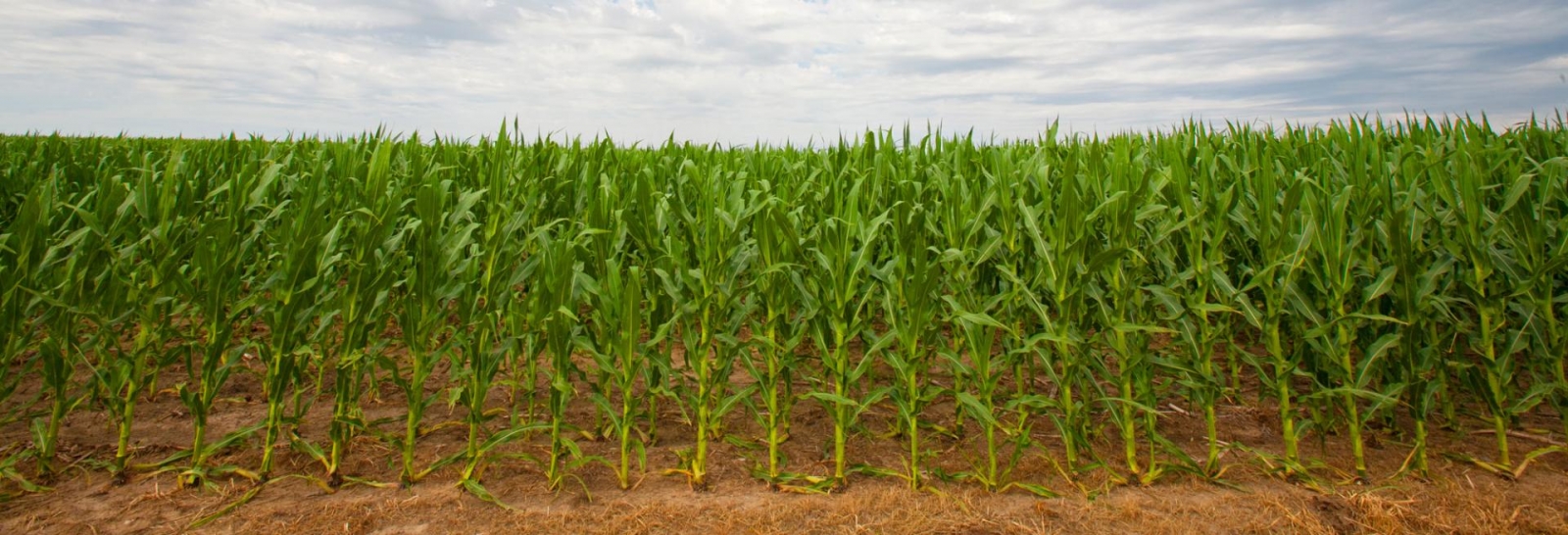
Table 1 summarizes labeled application rates for common soybean residual herbicides based on soil texture and organic matter, along with soil pH restrictions and cautions from product labels. This table can help growers match herbicide selection to field conditions while reducing the risk of poor weed control or crop injury (Figure 1). Herbicide rate recommendations are based on Nebraska Extension NebGuide EC130, “Guide for Weed, Disease, and Insect Management in Nebraska” (pp. 151–153). The information provided is not an alternative to labels — always consult the current product label before applying herbicides.
How to Use the Table
- Start from your field's most recent soil-test pH, texture, and organic-matter level.
- Use Table 1 to set the product rate for your soil — rates climb from coarse, low-organic matter soils toward fine-textured, higher-organic matter soils.
- Then check Table 2. Read each product's Critical Soil pH, then review At Application, which provides recommendations for this season (a hard cutoff, a rate cap, or a control concern), and Comment, which indicates whether pH may lengthen next year's rotational interval.
- “No pH restriction noted” means the label sets no specific limit — it is not a guarantee of crop safety.
- Active ingredients and WSSA groups in Table 2 are provided as a quick reference. Confirm them against the current product label.
| Product | Active ingredient (Weed Science Society of America site of action group) | Commercial product per acre (rate of formulated product) Sandy Loam (< 1% OM) | Commercial product per acre (rate of formulated product) Silt Loam (1–2% OM) | Commercial product per acre (rate of formulated product) Silty-Clay Loam (> 2% OM) | Critical soil pH | At application | Comment |
|---|---|---|---|---|---|---|---|
| Afforia | flumioxazin + thifensulfuron + tribenuron (Gp 14 + 2 + 2) | 2.5 oz | 2.5 oz | 2.5 oz | > 7.9 | pH > 7.9: extend application-to-planting interval +7 days (also +7 on light soils) | Consider pH if following with chlorimuron products |
| Anthem Maxx | pyroxasulfone + fluthiacet-methyl (Gp 15 + 14) | 2.5-3.25 oz | 3.25-4.75 oz | 3.5-5.5 oz | None noted | No pH restriction noted | N/A |
| Authority Assist 4SC | sulfentrazone + imazethapyr (Gp 14 + 2) | 6.0-8.0 oz | 8.0-10.0 oz | 10.0-12.0 oz | ~ 7.0 (rate) | pH < 7.0: higher rate; pH > 7.0: lowest rate in range | Bioassay advised (carryover) |
| Authority Elite / Broadaxe XC | sulfentrazone + S-metolachlor (Gp 14 + 15) | 22.0-25.0 oz | 25.0-32.0 oz | 25.0-38.7 oz | > 7.2 | pH > 7.2: use lowest rate (↑ availability & injury); high-pH (> 7.2) irrigation water also ↑ risk | N/A |
| Authority First / Sonic | sulfentrazone + cloransulam-methyl (Gp 14 + 2) | 4.0-5.0 oz | 4.5-6.4 oz | 5.0-6.4 oz | > 7.0 (rotation) | No application cutoff noted | High rate (6.45–8.0 oz) on ≤ 1.5% OM or pH > 7: 18-mo rotation |
| Authority MTZ | sulfentrazone + metribuzin (Gp 14 + 5) | 12.0-16.0 oz | 12.0-16.0 oz | 16.0-18.0 oz | > 7.5 | Do not use on calcareous soils or pH > 7.5; cap at 12 oz/A above 7.5 | N/A |
| Authority Supreme or Authority Edge | sulfentrazone + pyroxasulfone (Gp 14 + 15) | 6.0 oz | 6.0 oz | 7.0-9.0 oz | > 7.2 (rate); ≥ 7.8 (injury) | pH < 7.2: higher rate, > 7.2: lower rate; injury at pH ≥ 7.8 on low OM | N/A |
| Authority XL | sulfentrazone + chlorimuron-ethyl (Gp 14 + 2) | 4.0 oz | 6.0 oz | 8.0 oz | > 6.8 | Use only on soils generally ≤ pH 6.8 | Do not apply AUTHORITY XL in Nebraska west of US Hwy 281 and north of US Hwy 30; > 6.8: injury to next crop unless soybean / chlorimuron-tolerant corn |
| Boundary 6.5 or Tailwind | S-metolachlor + metribuzin (Gp 15 + 5) | Do not use | 1.5-2.0 pt | 1.5-2.25 pt | ≥ 7.5 (avoid); > 7.0 (rate) | Avoid calcareous/pH ≥ 7.5; on pH > 7.0 do not exceed 1.5 pt/A (metribuzin injury) | N/A |
| Canopy | chlorimuron-ethyl + metribuzin (Gp 2 + 5) | 2.25 oz | 3.0 oz | 4.0 oz | > 7.5 (injury); > 7.0 (rate) | Calcareous/pH > 7.5: injury risk; pH > 7.0: cap at 2.25 oz/A | In Nebraska (fields south of Route 30 and east of Route 281) on soils with a composite pH greater than 7, do not exceed 2.25 oz/A Canopy. |
| Command 3ME | clomazone (Gp 13) | 1.0 pt | 1.6 pt | 2.0 pt | ≤ 5.9 (carryover) | No application cutoff noted | Low pH (≤ 5.9): temporary whitening of rotational crops possible |
| Dimetric / Glory / Tricor (metribuzin) | metribuzin (Gp 5) | 0.33 lb | 0.40 lb | 0.50 lb | ≥ 7.5 | Calcareous soils or pH ≥ 7.5: injury risk | N/A |
| Dual II Magnum / Dual IIG Magnum / Parallel PCS | S-metolachlor (Gp 15) | 1.33 pt † | 1.33 pt † | 1.33 pt † | None noted | No specific pH threshold (S-metolachlor alone) | N/A |
| Enlite | flumioxazin + chlorimuron-ethyl (Gp 14 + 2) | 2.8 oz | 2.8 oz | 3.5 oz | > 7.0 (rate) | On pH ≤ 7.0, up to 4.25 oz/A; limit rate above pH 7.0 | DO NOT apply to land that has been or will be treated with metsulfuron and/or chlorsulfuron-containing herbicides in Nebraska and Kansas without observing the rotational crop intervals for those products Northern region (Fields north of Route 30 or west of Route 281) Central region (Fields south of Route 30 and east of Route 281) Different crop rotation intervals are defined for each crop based on the rate used and geographic region. In Nebraska, two regions are defined, check the label for the detailed rotation interval |
| Envive | flumioxazin + chlorimuron + thifensulfuron (Gp 14 + 2 + 2) | 2.5 oz | 3.0 oz | 3.5 oz | > 7.0 | pH > 7.0 (Central Region): do not exceed 2.5 oz/A | Central region: Field south of Route 30 and east of Route 281: do not exceed 2.5 oz/A |
| Fierce or Fierce EZ | flumioxazin + pyroxasulfone (Gp 14 + 15) | 3 or 6 oz | 3 or 6-7.5 oz | 3.75 or 6-7.5 oz | None noted | No pH restriction noted | N/A |
| Fierce MTZ / Kyber Pro | flumioxazin + pyroxasulfone + metribuzin (Gp 14 + 15 + 5) | 1 pt | 1-1.25 pt | 1.25 pt | ≥ 7.5 | Calcareous soils or pH ≥ 7.5: injury risk | N/A |
| Fierce XLT | flumioxazin + pyroxasulfone + chlorimuron (Gp 14 + 15 + 2) | 3.75 oz | 3.75-4.5 oz | 4.5-5.25 oz | > 7.6 (no apply); > 6.8 (rate) | Do not apply > 7.6; above 6.8 max 3.75 oz/A | The label gives pH-based plant-back intervals For Nebraska, follow Midwest region crop rotation intervals in label if south of Route 30 and East of Route 281 |
| Latir | Flumioxazin + imazethapyr (Gp 14 + 2) | 3.2 oz | 3.2 oz | 4.25 oz | None specified | No specific threshold; breakdown affected by pH/moisture/temp | N/A |
| Outlook | dimethenamid-P (Gp 15) | 12.0-14.0 oz | 14.0-21.0 oz | 18.0-21.0 oz | None noted | No pH restriction noted | N/A |
| Panther Pro | Flumioxazin + metribuzin + imazethapyr (Gp 14 + 5 + 2) | 12 fl oz | 12-15 fl oz | 15 fl oz | ≥ 7.5 | Calcareous soils or pH ≥ 7.5: injury risk | N/A |
| Prefix / Vise / Statement | S-metolachlor + fomesafen (Gp 15 + 14) | 2.0 pt | 2.0 pt | 2.0 pt | None specified | No specific pH threshold (bioassay advised) | N/A |
| Prowl H2O | pendimethalin (Gp 3) | 1.2-1.8 pt | 1.8-3.0 pt | 2.4-3.6 pt | None specified | No specific threshold; stressed stands (incl. high/low pH) ↑ injury | N/A |
| Pummel | imazethapyr (Gp 2) | Do not use | 1.6 pt | 1.6-2.0 pt | < 6.2 (plant-back) | No application cutoff noted | Interval depends on rainfall+irrigation & pH (pH > 6.2 + > 10″ R+I = shorter) |
| Pursuit | imazethapyr (Gp 2) | 4 oz | 4 oz | 4 oz | Low pH ↑ carryover | No cutoff; carryover worse on heavy/high-OM/low-pH/low-rainfall soils | Interval depends on rainfall+irrigation & pH (pH > 6.2 + > 10″ R+I = shorter) |
| Ransom | flumioxazin (Gp 14) + metribuzin (Gp 5) | Do not use | 8 oz | 10 oz | None noted | No pH restriction noted | N/A |
| Scepter | imazaquin (Gp 2) | 2.8 oz | 2.8 oz | 2.8 oz | None noted | No pH restriction noted (ALS carryover generally pH-sensitive) | N/A |
| Sonalan | ethalfluralin (Gp 3) | 1.5-2.0 pt | 2.0-2.5 pt | 2.5-3.0 pt | None noted | No pH restriction noted | N/A |
| Surveil | cloransulam-methyl + flumioxazin (Gp 2 + 14) | 3.5-4.2 oz | 3.5-4.2 oz | 3.5-4.2 oz | None specified | No specific pH threshold (bioassay advised) | N/A |
| Tendovo | S-metolachlor + metribuzin + cloransulam-methyl (Gp 15 + 5 + 2) | 1.2-1.5 qt | 1.5-2.1 qt | 1.75-2.3 qt | ≥ 7.5 | Calcareous soils or pH ≥ 7.5: injury risk | N/A |
| Torment | fomesafen (Gp 14) + imazethapyr (Gp 2) | 1.0 pt | 1.0 pt | 1.0 pt | None noted | No pH restriction noted | N/A |
| Trivence | chlorimuron + flumioxazin + metribuzin (Gp 2 + 14 + 5) | 6.0-10.0 oz | 6.0-10.0 oz | 6.0-10.0 oz | > 7.0 | pH > 7.0 (Central Region): do not exceed 6.0 oz/A | > 6.0 oz on pH > 7.0: injury to next crop For Nebraska, follow the restrictions in the label given for the central region if fields south of Route 30 and east of Route 281 DO NOT apply to land that has been or will be treated with metsulfuron and/or chlorsulfuron-containing herbicides in Nebraska and Kansas without observing the rotational crop intervals for those products. |
| Valor SX or EZ / Outflank | flumioxazin (Gp 14) | 2.0 oz | 2.0-3.0 oz | 2.0-3.0 oz | None noted | No pH restriction noted | N/A |
| Valor XLT | flumioxazin + chlorimuron-ethyl (Gp 14 + 2) | 3.0-5.0 oz | 3.0-5.0 oz | 3.0-5.0 oz | > 7.6 (no use); > 7.0 (rate) | Do not use > 7.6; above 7.0 max 2.5 oz/A | pH and region-based crop rotation intervals For Nebraska, follow the Midwest region crop rotation intervals if fields south of Route 30 and East of Route 281 Do not apply additional chlorimuron-ethyl-containing herbicides to fields treated with Valor XLT Soybean Herbicide. |
| Vida | pyraflufen-ethyl (Gp 14) | 0.5-1.0 oz | 0.5-1.0 oz | 0.5-1.0 oz | n/a (spray water) | Not a soil-pH limit — buffer spray water to ≤ 5.0 before adding | N/A |
| Warrant / Enversa | acetochlor, encapsulated (Gp 15) | 3.0 pt | 3.0 pt | 4.0 pt | None noted | No pH restriction noted | N/A |
| Warrant Ultra | acetochlor + fomesafen (Gp 15 + 14) | 48 fl oz | 48 fl oz | 48 fl oz | None noted | No pH restriction noted | N/A |
| Zidua Pro | saflufenacil + imazethapyr + pyroxasulfone (Gp 14 + 2 + 15) | 4.5-6.0 oz | 4.5-6.0 oz | 4.5-6.0 oz | None specified | No specific threshold; injury under stress (incl. high pH) | N/A |
| Zidua SC | pyroxasulfone (Gp 15) | 2.5-3.5 oz | 3.25-5.0 oz | 4.0-5.75 oz | > 7.5 | Avoid pH > 7.5 with low OM (injury) | N/A |
| Zone Defense | sulfentrazone + flumioxazin (Gp 14) | 3.5-4.0 oz | 4.5-5.0 oz | 5.0 oz | > 6.8 | Use only on soils generally ≤ pH 6.8 | > 6.8: injury to next crop unless soybean |
† Rate shown is Dual II Magnum (liquid). Dual IIG Magnum (granular): 6.0–8.0 lb (Sandy Loam) / 8.0–10.0 lb (Silt Loam) / 10.0–12.0 lb (Silty-Clay Loam); Parallel PCS: 1.6–2.0 pt (In all three soil types).