Early-season wheat stem maggot (WSM) injury has been confirmed in east-central Nebraska, raising new questions about WSM risk following cover crop termination.
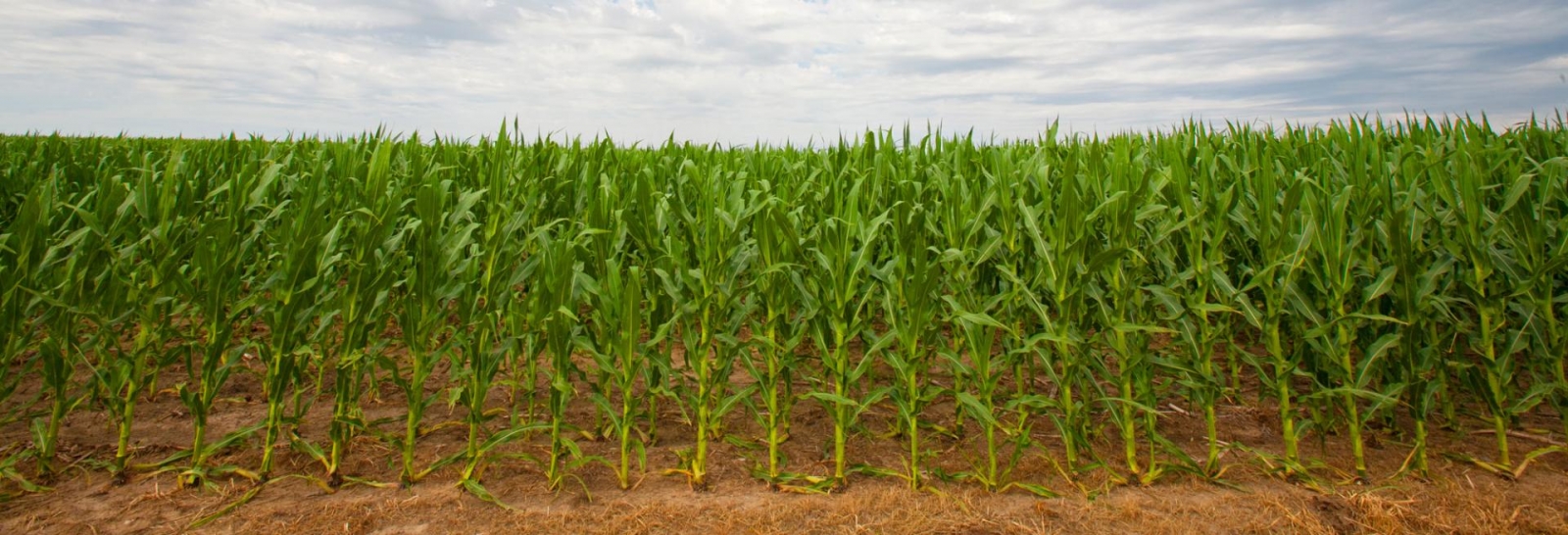
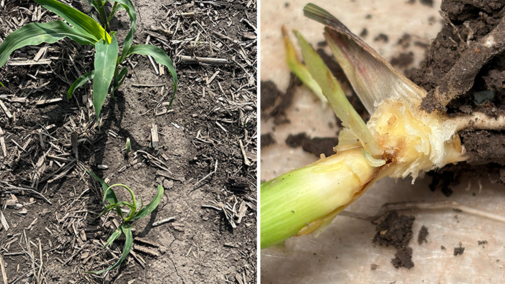
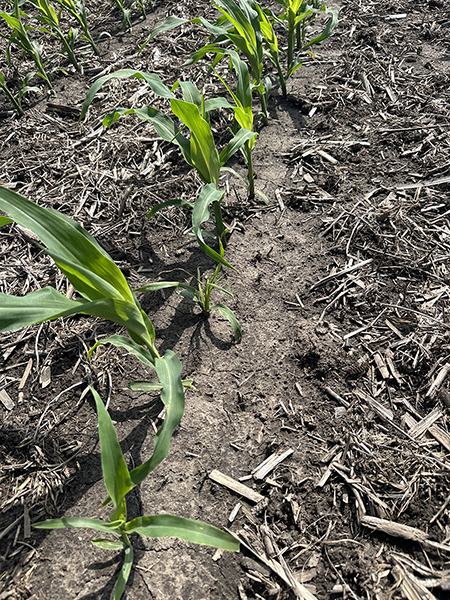
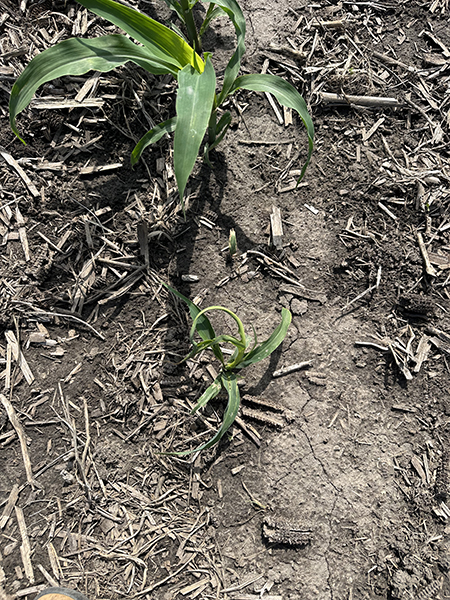
This week, Nebraska Extension detected early-season WSM injury in Polk County corn planted seven to 14 days after cover crop termination. Fields exhibited uneven plant heights (Figure 1), dead leaves in the whorl (“dead heart”) (Figure 2), excessive tillering (Figure 3), and patchy crop stands (Figure 4). Plant samples dissected in the lab confirmed the presence of WSM larvae (Figure 5).
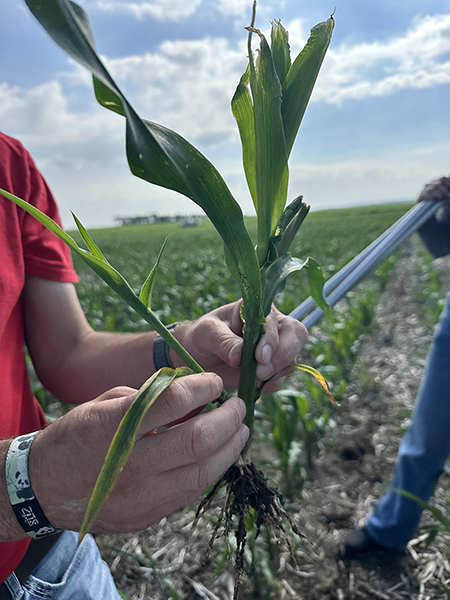
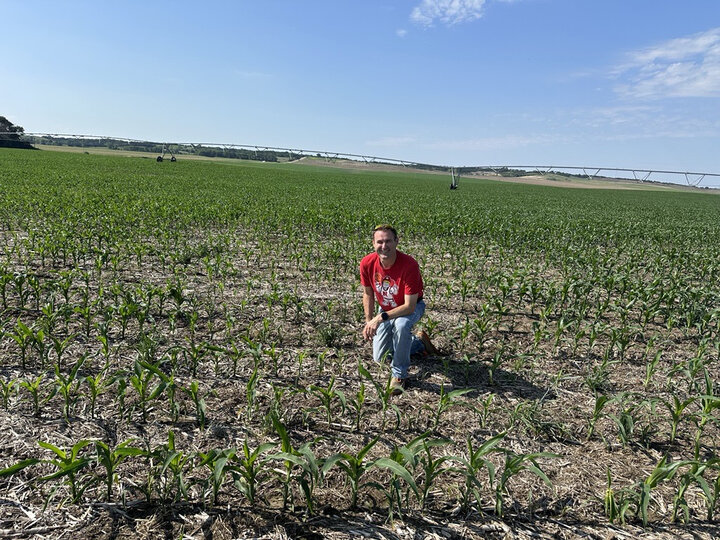
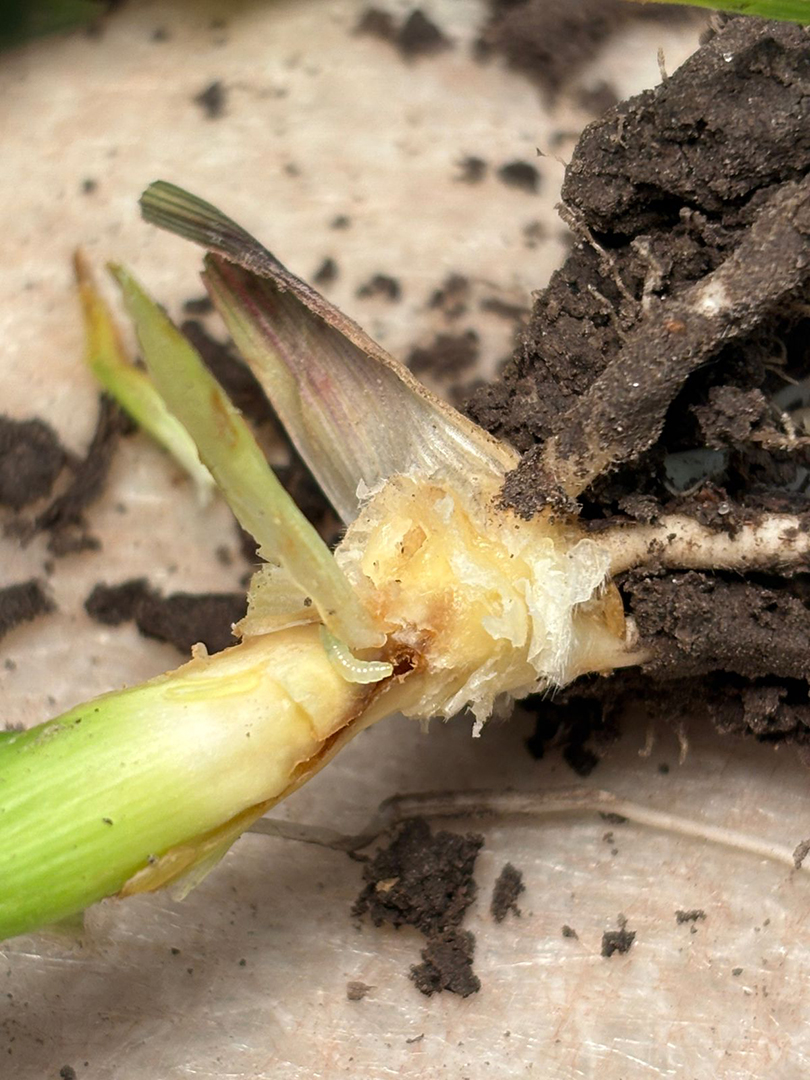
Based on information collected during 2017 field surveys, detecting WSM infestations in fields where cover crops were terminated one to two weeks before planting was not anticipated. Previous observations linked the greatest WSM risk to corn planted into living cover crops. These findings may be related to environmental conditions following herbicide termination of the cover crop and suggest that early termination alone may not be sufficient under certain environmental conditions.
Adult WSM Observations
From April 9-30, 2026, extension monitored commercial fields to detect WSM adult infestations. WSM were found in Colfax, Dawson, Dixon, Lancaster, Nuckolls, Polk, Platte, Saunders and York counties. Due to dry conditions in Nebraska this year, many growers across the state terminated cover crops prior to corn planting, a practice that generally helps decrease the risk of WSM infestation in corn.
WSM has been closely linked to planting corn into living rye or wheat cover crops, commonly referred to as “green planting”. Delaying cover crop termination until corn is planted allows growers to maximize weed suppression and soil health benefits. However, WSM can move from terminated cover crops into adjacent corn plants and tunnel into the cornstalk, destroying the growing point and halting normal vertical growth, which can result in reduced yield.
Data collected last year indicates that a 20% reduction in plant height could potentially result in a 25% yield loss compared to an uninfested plant. Plants with height reductions around 50% resulted in 85% to 93% yield loss.
If 30% or more of the field is affected, field losses could range from 15% to 30%, depending on injury severity.
This data comes from a single hybrid and location, so situations may vary from what was observed. We will continue tracking the impact of WSM and yield loss.
Chemical control in corn that is already infested with WSM larvae is not recommended, as larvae are difficult to reach due to their feeding location within the plant.
More information about the seasonal occurrence of this pest is available in “WSM: An Emerging Pest of Cover Crop to Corn Transition Systems (Carmona et al. 2019)”.