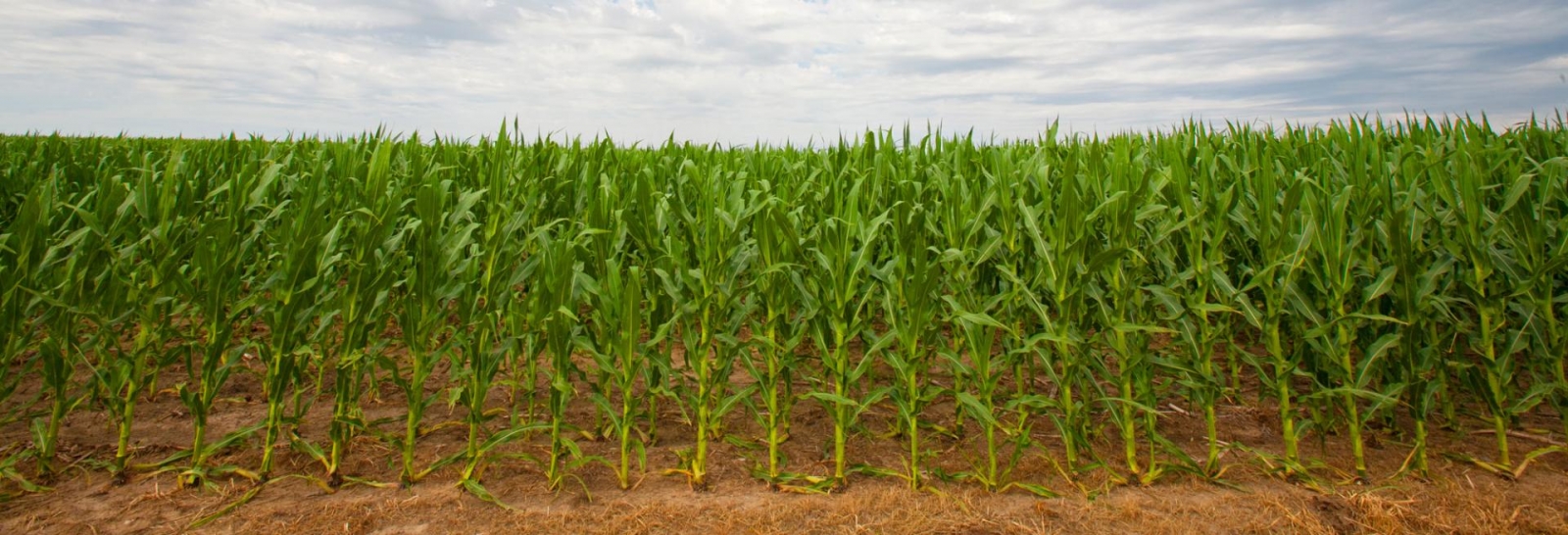
Key Takeaways for Corn Disease
Tar spot confirmed this week.
Treatment is not recommended at this time.
Monitor tar spot progression regularly as crop matures.
Reevaluate the need for treatment during early to mid-reproductive stages.
Southern rust not currently reported in the U.S.
Crop diseases have been especially important in parts of Nebraska during the last two years. Before you make a fungicide decision on corn or soybean, there are several factors to consider.
Corn Disease
Tar Spot
Tar spot (Figure 1) was confirmed in several counties in Nebraska this week. This disease is caused by a fungus (Phyllachora maydis) that overwinters very effectively in Nebraska. The likelihood of your corn developing tar spot is greater if there was substantial tar spot disease in the past (because of the presence of more overwintering fungus to cause disease again).

The tar spot fungus is also favored by wet conditions but prefers cooler temperatures averaging 60–70°F. That’s why we often observe tar spot development early in the season (now), as well as a surge of disease often again late season when conditions are more favorable.
Overhead irrigation, such as through center pivots, can also increase the chances of tar spot development as it reduces the temperature by several degrees and increases relative humidity and leaf wetness for several hours. Pivot-irrigated fields should be scouted regularly, as they are at a higher risk for the disease, as well as areas where frequent rainfall occurs with a history of substantial tar spot pressure..
Tar spot has been confirmed in several Nebraska counties as of this week (most at V6–V8 leaf stages) at very low incidence and severity — usually only one to two spots in a few plants per field. This is approximately the same timing as development in previous years in eastern Nebraska (and other states) and is not cause for alarm at this time. Recent rainfall events (and the frequent irrigation of fields in the drier areas of Nebraska) supported disease development.

We do not recommend fungicide treatment at these early stages. Results from multi-state fungicide trials summarized on the Crop Protection Network show that treatment during the vegetative stages — V6 through V11 — was not economical even though disease had already begun.
Fungicide applications made between VT–R1 through R3 (milk) or occasionally early R4 (dough) stages were the most effective at controlling tar spot and had the best chance of generating a favorable net return. In those experiments, fungicide applications made to corn before tar spot severity exceeded 5% (Figure 3) on the ear leaf by early R4 were still economical. Applications made after disease on the ear leaf exceeded 6% at application were not economical. Additionally, products with a mixture of active ingredients from two or more fungicide classes were most effective.

Fungicides can effectively manage tar spot, but only if applied at optimal times, and treatment may not always be economical depending on disease pressure.
Southern Rust
Arguably, the most important disease in corn during the past two years in eastern Nebraska was southern rust. Fortunately, having a history of southern rust does not impact disease development again this year because the fungus causing that disease does not overwinter (see the October 2025 CropWatch article “MythBusters – Southern Rust Edition” for more information). Rust spores must blow into our area from southern locations.
A couple of the factors that played a significant role in southern rust development in Nebraska in 2025 were likely related to the dramatic increase in corn acreage between 2024 and 2025 in some southern states. This allowed for more southern rust development there and larger volumes of spores to be blown northward into Nebraska and the Midwestern states.
Unfortunately, when rust spores arrived, they encountered unusually favorable weather conditions, specifically long periods of sustained high relative humidity, frequent rainfall, long periods of cloud cover reducing solar radiation, and warm temperatures averaging about 80°F (optimal for the southern rust fungus). Southern rust flourished as a result of these conditions and most of our corn hybrids are sensitive to the disease.
At this time, no southern rust has been reported in Nebraska or in the United States on the Crop Protection Clinics’ Southern Rust Distribution map.
You can review the most recent reports of tar spot or southern rust on the maps at the Crop Protection Network’s website. You can also view other diseases that have been reported or submit your own local reports on the Crop Lookout Tool.
More information on tar spot and the aforementioned multi-state fungicide management trial results can be found online at the Crop Protection Network or by reaching out to one of your Nebraska Extension professionals. Also, follow along with #ScoutNebraska on X and YouTube to monitor disease development in real-time across the state.
Soybean Disease
There are several key disease issues for soybean, including Sclerotinia stem rot (a.k.a. white mold) and frogeye leaf spot. While both cause yield loss in Nebraska, they range in severity from field to field. The downside risk of white mold is greater, so focus management there if you have a history of the disease.
It’s important to note that soybean flowering is the period of peak susceptibility, but that only present flowers will be protected by a foliar application. Consider waiting until R2 for your primary application. Additional problems causing foliar symptoms in soybean — such as sudden death syndrome, brown stem rot or red crown rot — may arise, but keep in mind that none of these are manageable with a foliar fungicide application. Management is expensive, so starting with a proper diagnosis will ensure your management response is effective.
If you need help identifying these or other disease or insect issues, learn how to submit a sample to the UNL Plant and Pest Diagnostic Clinic.