Key Takeaways
Flight predictions: Western bean cutworm flight is expected to occur earlier than last year across most of Nebraska.
Time your scouting: Use predicted flight dates and degree-day estimates to monitor fields at the right time.
Treat only when needed: Scout for egg masses and larvae, and follow established treatment thresholds before applying insecticides.
Western bean cutworm moths are emerging across Nebraska, marking the start of scouting season for corn and dry bean producers. This article provides predicted flight dates, degree-day information and scouting recommendations for 2026.
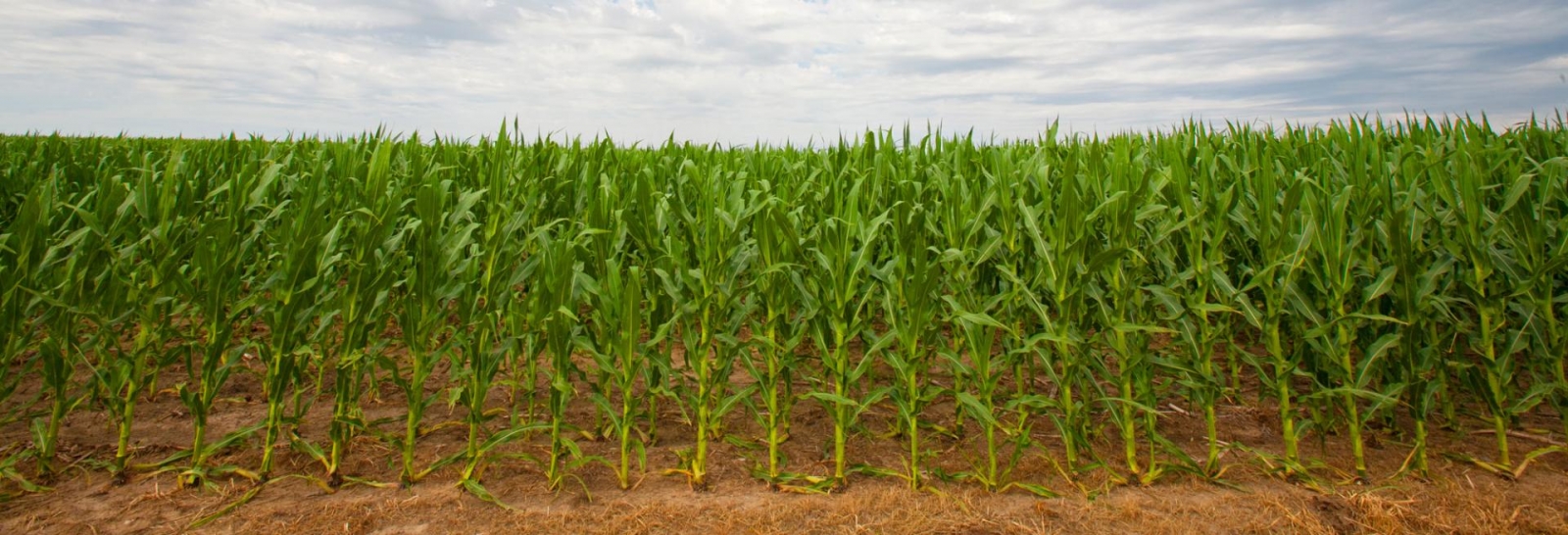
Western bean cutworm (WBC) moths have already been detected in green pheromone traps across Nebraska. It is time to start scouting for this important pest of corn and dry beans. WBC moths prefer to lay their eggs on corn plants when they are approaching tassel emergence, as newly hatched WBC larvae prefer to feed on the tassel. A match between moth flight and the late-whorl to early-tassel stage of corn can result in high infestation levels. However, if corn has not reached the tasseling stage, newly hatched larvae are much less likely to survive (Paula-Moraes et al., 2012).
Predicted Dates of WBC Flight for Nebraska in 2026
Overall, the predicted dates for 25% of WBC flights across Nebraska range from two to 10 days earlier than 2025. Columbus is the only location with the same predicted flight timing as last year. No locations are predicted to experience later flights (Table 1).
Municipality | Coordinates | Elev. | 5% | 10% | 25% | 50% | 75% | 90% | 95% | |
|---|---|---|---|---|---|---|---|---|---|---|
Alliance, NE | 42.17 -102.93 | 4072 | 11 July | 13 July | 17 July | 20 July | 24 July | 28 July | 30 July | |
Arthur, NE | 41.45 -101.72 | 3589 | 4 July | 6 July | 10 July | 13 July | 17 July | 20 July | 23 July | |
Clay Center, NE | 40.52 -98.05 | 1788 | 27 June | 29 June | 2 July | 6 July | 10 July | 13 July | 16 July | |
Columbus, NE | 41.46 -97.33 | 1450 | 30 June | 2 July | 5 July | 9 July | 13 July | 16 July | 19 July | |
Concord, NE | 42.38 -96.97 | 1545 | 29 June | 1 July | 4 July | 8 July | 11 July | 14 July | 18 July | |
Gothenburg, NE | 40.95 -100.20 | 2628 | 25 June | 28 June | 1 July | 5 July | 8 July | 12 July | 15 July | |
Grand Island, NE | 40.96, -98.31 | 1843 | 26 June | 28 June | 1 July | 5 July | 8 July | 12 July | 15 July | |
Hayes Center, NE | 40.55 -101.03 | 3064 | 30 June | 2 July | 5 July | 9 July | 13 July | 16 July | 19 July | |
Holdrege, NE | 40.5 -99.37 | 2323 | 29 June | 2 July | 5 July | 9 July | 12 July | 16 July | 19 July | |
Imperial, NE | 40.50, -101.65 | 3294 | 26 June | 28 June | 2 July | 5 July | 9 July | 13 July | 16 July | |
Kearney, NE | 40.72 -99.02 | 2129 | 25 June | 28 June | 1 July | 4 July | 8 July | 12 July | 15 July | |
Lincoln, NE | 40.84, -96.76 | 1170 | 21 June | 24 June | 27 June | 1 July | 4 July | 8 July | 11 July | |
North Platte, NE | 41.08 -100.78 | 2841 | 3 July | 5 July | 9 July | 12 July | 16 July | 20 July | 22 July | |
Ogallala, NE | 41.12 -101.72 | 3230 | 2 July | 4 July | 8 July | 11 July | 15 July | 19 July | 21 July | |
Scottsbluff, NE | 41.88 -103.68 | 3934 | 1 July | 3 July | 7 July | 10 July | 14 July | 18 July | 20 July | |
Sidney, NE | 41.22 -103.03 | 4331 | 6 July | 8 July | 12 July | 15 July | 19 July | 23 July | 25 July | |
York, NE | 40.87 -97.63 | 1637 | 24 June | 27 June | 30 June | 4 July | 7 July | 11 July | 14 July | |
To produce the table above, recorded temperatures from March 1 through June 30, 2026, were obtained from the High Plains Regional Climate Center (HPRCC/SC ACIS). A 10-year average (2015-2025) was used to estimate average temperatures beginning July 1.
Another option for viewing moth flight predictions is UNL’s AgriTools mobile app for Apple or Android, which provides forecasts similar to the table below by pulling temperature data from weather stations around your location.
Using Insect Degree-Day Models to Estimate WBC flight
Knowing when an insect pest will cause damage in a field is essential for producers and crop consultants when making management decisions. Because insect development is strongly influenced by temperature, emergence timing can be estimated using a combination of calendar dates and seasonal temperature data.
For example, if a day has a low temperature of 55°F and a high of 65°F, the WBC model (38°F lower threshold, 75°F upper threshold) calculates degree-days as follows:
[(65+55)/2]-38
[120/2]-38 = 22°F degree-days
Note: If the average temperature is less than the lower threshold (38°F), then you should use the lower threshold as the average temperature. If the average temperature is greater than the upper threshold (75°F), then you should use the upper threshold prior to subtracting the lower threshold.
Entomologists from the University of Nebraska-Lincoln (Tom Hunt and Robert Wright), and the University of Minnesota (Roger Moon, Bill Hutchison and Anthony Hanson) developed the current degree-day model.
The model uses a lower threshold of 38°F and an upper threshold of 75°F beginning on March 1.
Once 2,577°F degree-days have accumulated, 25% of the WBC flight occurs and scouting of corn fields should begin. Pheromone trapping in dry bean fields should begin the last week of June before any WBC have emerged.
If insecticide treatment is warranted, applications should be made 10-21 days after peak flight in dry beans and when 95% of corn plants have tasseled. For more information, see Nebraska Extension NebGuide G2013, “Western Bean Cutworm in Corn and Dry Beans” by Seymour et al. 2010.
| °Days F (±95% Confidence Interval) | % WBC Flight |
|---|---|
| 2,377 (1,843 - 3,066) | 5 |
| 2,456 (2,147 - 2,809) | 10 |
| 2,577 (2,416 - 2,749) | 25 |
| 2,704 (2,577 - 2,838) | 50 |
| 2,838 (2,660 - 3,027) | 75 |
| 2,977 (2,603 - 3,046) | 90 |
| 3,077 (2,385 - 3,968) | 95 |
Scouting for Western Bean Cutworm
Western bean cutworm egg masses are typically found on the upper surfaces of corn leaves and the lower surfaces of dry bean leaves. When first laid, the eggs are white and gradually darken during the five- to seven-day development (Figure 1).

Freshly hatched larvae will first eat the eggshells before consuming the host plant (Figure 2).

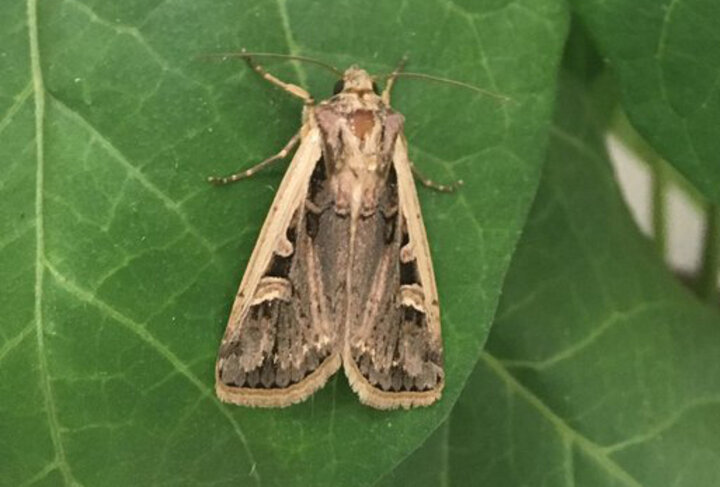
Older larvae can be identified by two dark-colored rectangular spots directly behind their head (Figure 3) and can be found around the corn ear area or inside the ear. Adult moths are identifiable by a white band on the anterior margin on the forewing followed by a white circle halfway down the wing and a white crescent located two-thirds down the wing (Figure 4).

When scouting for WBC in corn, you can save time by using UNL’s free speed-scouting mobile app on any iPad, iPhone or iPod Touch. It is also available as a downloadable Excel spreadsheet, Nebraska Extension EC1585, “Western Bean Cutworm Speed Scouting Spreadsheet.” Research supporting the use of smaller sample sizes is available in Paula-Moraes et al., 2011.
If you are not using the speed-scout tool, check 20 plants each in at least five areas of the field (total of 100 plants per field). For corn hybrids that do not provide Bt control of WBC, consider applying an insecticide if 5%-8% of the corn plants have egg masses or larvae. If an insecticide treatment is warranted in corn, it should be made when 95% of the plants in a field have tasseled.
It is more challenging to scout for WBC in dry bean fields due to dense and robust bean canopy. However, pheromone traps can be used to provide an estimate of a possible infestation and should be installed prior to the predicted 5% flight date.
Dry Bean Pheromone Trap Thresholds:
- Low Risk: If fewer than 700 (milk jug)/1,200 (green bucket) moths are caught up to peak.
- Moderate Risk: If more than 700 (milk jug)/1,200 (green bucket), but fewer than 1,000 (milk jug)/1,700 (green bucket) moths are caught.
- High Risk: If there are more than 1,000 (milk jug)/1,700 (green bucket) moths caught.
Treatment Recommendations
Vip3A is the only Bt protein that provides reliable protection against WBC. Products that express the Vip3A protein, such as Agrisure Viptera, Leptra and Trecepta, provide effective control. However, Bt corn should still be scouted to verify performance.
See the Handy Bt Trait Table for a list of commercially available Bt corn hybrids and the proteins they express.
For insecticide treatment recommendations, see the CropWatch article, “Scouting and Treatment Recommendations for Western Bean Cutworm” and this chemigation article.
Additional Resources
- Handy Bt Trait Table for U.S Corn Production
- Western Bean Cutworm Speed-Scouting App for Apple
- Western Bean Cutworm Speed Scout spreadsheet
- Other apps on topics ranging from irrigation management to ag finance
- Light trap reports for Clay Center, Mead and North Platte
- Scouting and Treatment Recommendations for Western Bean Cutworm
- Chemigation efficacy of bifenthrin and chlorantraniliprole for Striacosta albicosta (Lepidoptera: Noctuidae) management in corn under different irrigation depths