Key Points:
- A 14-state study from 194 randomized field trials showed that adding neonicotinoid-treated seeds to a fungicide rarely increased yield (1.9 bu/ac)
- Out of 11 site-year Nebraska On-farm trials, only 1 showed increased yield with a full chemical seed treatment compared to biological or untreated seed.
- Cutting a seed treatment has the potential to save up to the entire cost of the seed treatment, whether chemical or biological.
- Chemical seed treatments could be considered in fields with a history of sudden death syndrome or when planting into cool, wet soils.
With higher input costs than a year ago and low soybean prices, producers have been asking about options to cut soybean inputs, including seed treatment costs. Some producers are also seeking alternative methods compared to chemical fungicide/insecticide seed treatments due to potential impacts of chemical seed treatments on pollinators, soil microbes, the environment, and/or human safety. This article shares data for consideration in reducing soybean seed-treatment costs.
Insecticide Seed Treatment Considerations:
This next season, the most reliable way to cut seed‑treatment costs in Midwest soybean is to match inputs to risks; start by treating insecticidal seed treatments as an exception rather than the rule. A 14‑state study evaluated data from 194 randomized field trials (Mourtzinis et al., 2019) showing that adding neonicotinoid-treated seeds to a fungicide base rarely increased yield (about 1.9 bu/ac). Given average per‑acre costs and current soybean prices, most fields will not recover the cost of the insecticide. Neonicotinoid seed treatments (NST) may still be justified when early, predictable pest pressure is likely, for example, persistent seedcorn maggot or wireworm issues, or consistent early bean leaf beetle risk with very early planting into heavy residue. Outside of those situations, the economic approach is to save on upfront costs.
Fungicide Seed Treatment (FST) Considerations:
Use fungicide seed treatments in the same manner (selectively rather than by default). Fungicides are most likely to pay when planting early (April through early May) into cool, wet soils that slow emergence and favor seedling pathogens such as Pythium and Phytophthora. Additionally, fields that are poorly drained, have compacted areas, have a known history of seedling disease, and susceptible varieties could benefitfrom fungicide seed treatment. In high-risk situations, multi‑environment studies show measurable protection of stands and yields. Returns will likely be reduced with normal or late planting into warm, well‑drained soils that lack a history of seedling disease and have varietal tolerance.
Fields without a history of sudden death syndrome (SDS) and varieties with tolerance to SDS may not need the addition of ILeVO® or Saltro® seed treatments. Consider reserving SDS seed treatments for acres with a strong SDS history and especially where early planting into wet, cool soils is common and soybean cyst nematode is present. Evidence from peer-reviewed research data shows that adding fluopyram to the base treatment reduces SDS and can increase yield, with profitability tied to disease pressure; research also indicates that pydiflumetofen provides similar suppression. Biological products like Heads Up® have been shown by other Universities to help reduce white mold and SDS incidence while ILeVO® and Saltro® have been shown to reduce SDS and soybean cyst nematode incidence.
Seeding Rates:
Lowering the seeding rate is a direct and often underused tool for trimming treatment costs, because pricing is per seed. Peer‑reviewed Wisconsin work across 18 site‑years quantified an economically optimalseeding rate (EOSR): with a typical FST+NST package (CruiserMaxx), EOSR was around 94,000–106,000 seeds/ac, and a fungicide‑only package (ApronMaxx) did not provide an average yield or profit gain versus untreated. Nebraska On-Farm Research results since 2006 showed that growers can plant 120,000 seeds/ac and aim for a final plant stand of 100,000 plants/ac (in 30” rows and heavier textured soils) without receiving a yield loss. The on-farm research was done without calibrating seed to the germination rate, as all seed had at least 90% germination. All seeds also had a typical FST + NST package. Broader Upper Midwest research likewise shows soybeans can hit at least 95% of maximum yield with modest final stands thanks to compensatory branching, which supports reducing seeding rates from the traditional “comfortably high” levels. Recognize that trimming back population cuts both seed cost and the per‑acre treatment bill.
Nebraska On-Farm Research Seed Treatment Data:
From 2023-2025, growers have conducted 11 site-years of Nebraska on-farm research soybean seed treatment studies (Table 1). The studies were conducted in Seward, York, Polk, Hamilton, and Clay Counties with planting dates ranging from April 23 to May 30. The goals for the growers were to evaluate the economics and yield resulting from the seed treatments. Some of these growers also desire to move away from traditional fungicide/insecticide seed treatments due to potential impacts to pollinators, soil health, and human health. Some of the growers were also interested in any increased plant health due to early seed and microbial associations with a biological seed treatment that may have influenced a healthier rhizosphere microbiome (Berendsen, 2012). Only yield and any presence of disease was assessed.
Treatments Used:
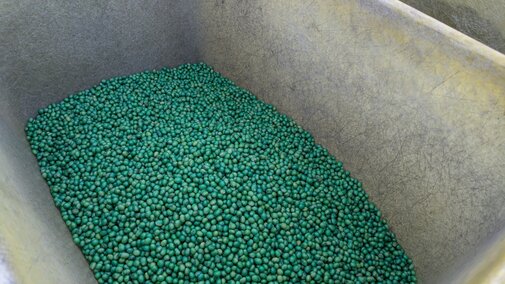
- Full company seed treatment. Cost: $13.72-29.00/ac
- Biological seed treatment (created and treated by one of the growers): blend of 2 oz PhycoTerra® ST, 1 oz Heads Up®, 1 oz N-Gage Ultra ST, 0.75 oz Bio ST VPH in 100 gal solution. In a second tank, 2 oz of Exceed Soybean inoculant was used per 100 gal only for this treatment. Cost: $9.00-$9.20/ac
- Untreated Seed. Cost: none
- Two other biologicals used included a seed treatment by Elevate Ag (Clay 2025) (Cost: $34/ac) and a home-made compost extract seed treatment (Lancaster 2025) ($0.63/ac).
Results: The results of Table 1 show that in only 1 site-year (Seward-1 2025) the yield of the full company seed treatment out-yield the biological or untreated seed with which it was compared. The cost of the treatments varied by grower due to the products applied to the seed and the seeding rate. Planting dates varied on the year and location, with the locations in 2024 receiving more spring rainfall with later soybean planting. The locations in 2025 were generally planted into warm, dry soil conditions. Soybean disease was not observed as a problem in any of these on-farm research fields even though several of the locations in 2023 and 2024 had a history of white mold.
| Location, Year | Number of Reps | Planting Date | Full Company | Biological | Untreated | Full Company Cost ($/ac) | Biological Cost ($/ac) |
|---|---|---|---|---|---|---|---|
| Seward, 2023 | 6 | May 2 | 62A | 61A | no data | $28.00 | $9.20 |
| York, 2023 | 6 | May 10 | 66A | 67A | no data | $28.00 | $9.20 |
| Hamiliton, 2023 | 6 | May 22 | 69A | 68A | no data | $16.63 | $9.20 |
| Seward 1, 2024 | 4 | May 10 | 71A | 69A | 70A | $27.00 | $9.00 |
| Seward 2, 2024 | 6 | May 30 | no data | 70A | 70A | no data | $9.00 |
| Polk, 2024 | 4 | May 27 | 77A | 75A | no data | $17.10 | $9.20 |
| Clay, 2025 | 6 | May 5 | 71A | 68B | 70A | $18.50 | $32.14 |
| Seward 1, 2025 | 4 | April 29 | 76A | 73B | no data | $29.00 | $9.00 |
| Seward 2, 2025 | 3 | April 28 | 76A | no data | 75A | $13.72 | no data |
| York, 2025 | 3 | April 28 | 77A | no data | 76A | $13.72 | no data |
| Lancaster, 2025 | 4 | April 23 | 63A | 63A | 63A | $18.51 | $0.63 |
Table 1 Note: Same letters are not statistically different at 90% confidence level. Analyzed by each individual location.
Conclusion:
Putting it all together each spring: if there’s no consistent early‑season insect history, order fungicide‑only or untreated seed according to planting window and soil fit and skip NSTs. If you’re planting early into cool, wet conditions or the field has a record of seedling disease, use a fungicide treatment matched to the likely pathogens and prioritize drainage and seedbed preparation. On SDS‑prone fields, add fluopyramor pydiflumetofen. Set your seeding rate using EOSR principles-using the ~94,000–120,000 seeds/ac range as a reasonable starting point for many systems-and tailor upward or downward based on emergence and field potential. If insects appear, rely on scouting and published economic thresholds before pulling the trigger on foliar control. Also, consider trying this for yourself via on-farm research! This is an easy study to split a planter or to alternate planting treated vs. untreated seed across a field. Please reach out to the authors if you’re interested in testing this for yourself.
References
- Mourtzinis, S., Specht, J. E., Hamilton, E., Marburger, D., Conley, S. P., et al. (2019). Neonicotinoid seed treatments of soybean provide negligible benefits to US farmers. Scientific Reports, 9, 11207. https://doi.org/10.1038/s41598-019-47442-8
- Gaspar, A. P., Mitchell, P. D., & Conley, S. P. (2015). Economic risk and profitability of soybean fungicide and insecticide seed treatments at reduced seeding rates. Crop Science, 55(2), 924–933. https://doi.org/10.2135/cropsci2014.02.0114
- De Bruin, J. L., & Pedersen, P. (2008). Soybean seed yield response to planting date and seeding rate in the Upper Midwest. Agronomy Journal, 100(3), 696–703. https://doi.org/10.2134/agronj2007.0115
- Ragsdale, D. W., McCornack, B. P., Venette, R. C., et al. (2007). Economic threshold for soybean aphid (Hemiptera: Aphididae). Journal of Economic Entomology, 100(4), 1258–1267. https://doi.org/10.1603/0022-0493(2007)100[1258:ETFSAH]2.0.CO;2
- Kandel, Y. R., Bradley, C. A., Sweets, L. E., Tenuta, A. U., Wise, K. A., & Mueller, D. S. (2018). Benefits and profitability of fluopyram‑amended seed treatment for suppressing sudden death syndrome and increasing soybean yield: A meta‑analysis. Plant Disease, 102(6), 1093–1100. https://doi.org/10.1094/PDIS-10-17-1540-RE
- U.S. Environmental Protection Agency (2025, March 25). Benefits of Neonicotinoid Seed Treatments to Soybean Production. https://www.epa.gov/pollinator-protection/benefits-neonicotinoid-seed-t…;
- Hurry, J. J., Vann, R. A., Collins, G. D., Cahoon, C. W., & Lux, L. L. (2025). Fungicide seed treatment impact on soybean stand and yield across planting dates and maturity groups in North Carolina. Agronomy Journal, 117(4), e70142.
- Brhel, Jenny, Thompson, Laura, Stepanovic, Strahinja, Luck, Joe, and Mueller, Nathan. Soybean Seeding Rates. April 18, 2019. UNL CropWatch. https://cropwatch.unl.edu/2019/soybean-seeding-rates/
- Hamilton, Ryan, Anderson, Eric, Sang, Hynkyu, Wang, Dechun, & Chilvers, Martin I. (2026) Evaluating a saponin biological seed treatment on soybean disease and yield in Michigan and the challenges in biological seed treatment efficacy, Canadian Journal of Plant Pathology, 48:2, 120-133, https://doi.org/10.1080/07060661.2025.2597336
- Berendsen, Roeland L., Pieterse, Corne´M.J., and Bakker, Peter A.H.M. August 2012. The rhizosphere microbiome and plant health. Trends in Plant Science Vol. 17, No. 8, pg. 478-486.