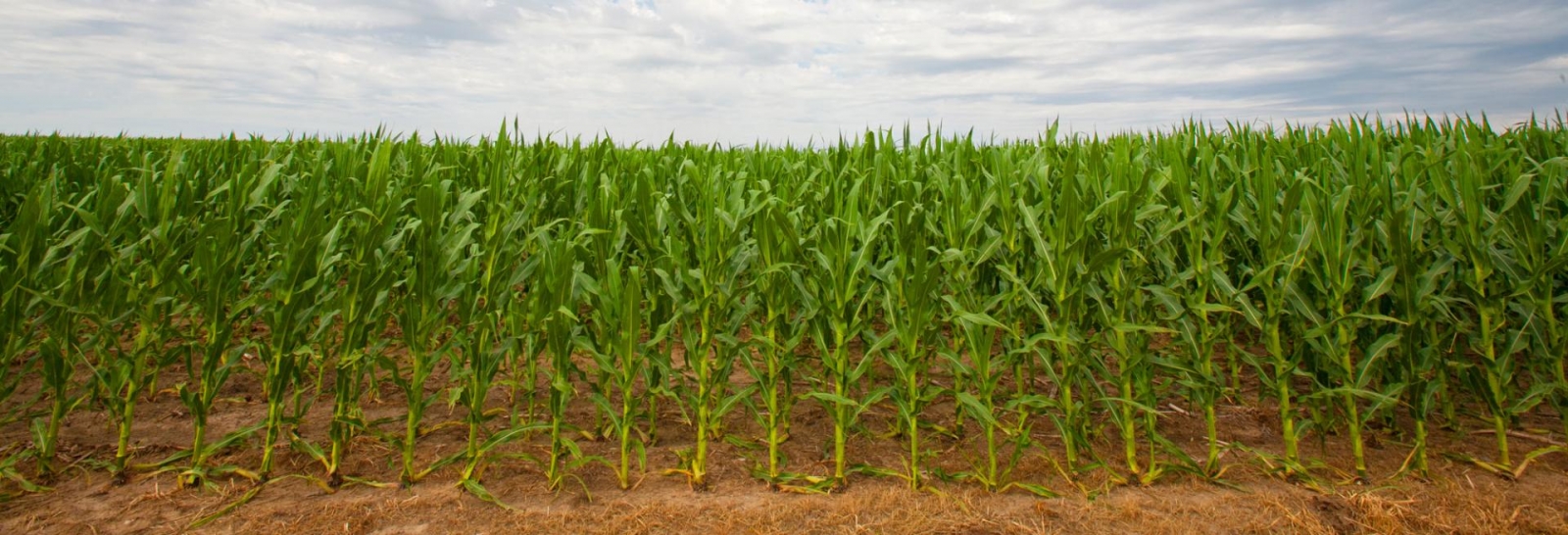
With prolonged wet weather already complicating Nebraska's harvest, lodged corn can add another challenge for growers. Whether caused by disease, drought, wind or severe weather, downed stalks can slow harvest, increase grain loss and place additional demands on operators and equipment. Adjusting harvesting practices and combine settings can help growers recover more of the crop.
Expect a Slower Harvest
Harvesting severely lodged corn requires patience.
Communicate with everyone involved in harvest about the likelihood of slower speeds and reduced productivity. Taking frequent breaks, getting adequate rest and eating well can help manage the additional stress and fatigue associated with these conditions.
Growers may also face a shorter daily harvest window. Stalks may not feed well when wet with dew, while excessively dry stalks can pile up and interfere with feeding.
Harvest Lodged Corn as Soon as Practical
To minimize additional grain loss, harvest lodged corn as soon as field conditions allow safe equipment access. The longer stalks and ears remain close to the ground, the greater the risk of moisture exposure, mold development and declining grain quality.
Work With the Direction of the Lodging
When corn is lodged across the rows, harvesting from the downwind side of the field may improve gathering conditions.
When corn is lodged with the row, harvesting against the lean may help gathering chains pick up stalks.
However, don't assume one direction is always better. Check actual gathering losses to determine whether harvesting in only one direction reduces losses enough to justify the additional time and travel.
It is difficult to see missed ears under heavy residue. When conducting loss estimates, make sure to physically shuffle your feed through the check area to locate any hidden ears beneath the residue.

Adjust the Corn Head
The corn head may need substantial changes when harvesting lodged corn. Depending on field conditions, the following changes may improve gathering efficiency and reduce grain loss:
- Lower the head: Operate the head as low as practical without picking up excessive rocks and soil.
- Flatten the header angle: When corn is lodged across the rows, a flatter header angle of approximately 20 degrees can help stalks rise over the snouts more easily, reducing resistance from gravity.
- Increase header angle when appropriate: When corn is lodged “with the row”, the steeper angle can help gathering chains or be more aggressive to grip the stalks.
- Reposition gathering chains: Adjust the chains on their sprockets so the lugs are directly across from one another allowing a more aggressive grip on the stalk.
- Adjust stripper plates: Open the plates slightly, if needed, to better accommodate stalk width and increase the taper from front to back.
- Remove ear-saver flaps: Removing these flaps from each row may allow smoother material flow under difficult harvesting conditions.
- Lower tall crop shields: When appropriate, lower the shields at the ends of the corn head.
- Consider powered spiral cones: These attachments can help move lodged stalks into the gathering area.
- Add weight to poly snouts: Additional weight may help poly divider snouts to remain beneath the canopy.
- Consider a corn reel: A corn reel may improve travel speed and productivity, but check field losses to determine whether it increases grain loss.
Fine-Tune the Combine for Lodged Corn
Slower harvest speeds may require additional combine adjustments to minimize grain loss and maintain grain quality. Consider the following settings:
- Fan speed: Reduce fan speed as needed to retain grain while still allowing lightweight, poor-quality kernels to be blown out.
- Rotor speed: Reduce rotor speed as needed to maintain grain quality.
Check kernel losses behind the combine and grain quality in the tank to determine whether further adjustments are necessary.
Corn head plugging is more common when harvesting lodged corn. If a plug develops, completely shut down the machine and wait for all moving parts to stop before leaving the cab. Take the key with you to prevent anyone from restarting the machine unexpectedly. Use the manufacturer's head cylinder stops when working around or underneath the head.
Harvested corn may also contain more foreign material and soil than normal, increasing the potential for grain storage problems. Monitor grain quality carefully before and during storage.
Severe Cases May Require a Grain Platform
In severe lodging situations, a grain platform may be an option for harvesting corn. However, expect reduced harvesting capacity because the entire corn plant must pass through the combine.
Additional adjustments may be necessary to accommodate the increased volume of plant material, including increasing concave clearance and fan speed. Always follow machine-specific recommendations. Be aware that harvesting corn with a grain platform may also increase the risk of damage to the platform.
Don’t Trust the Yield Monitor Without Checking It
Slower harvest speeds and frequent stopping and starting can affect yield monitor accuracy. If harvesting conditions differ significantly from normal, calibrate the yield monitor at a speed representative of actual harvesting conditions. Also, verify header-height calibration to ensure the system correctly recognizes when the combine is harvesting.
Interpret yield data collected under highly variable speeds and header positions with caution.
Grazing Corn on the Ground
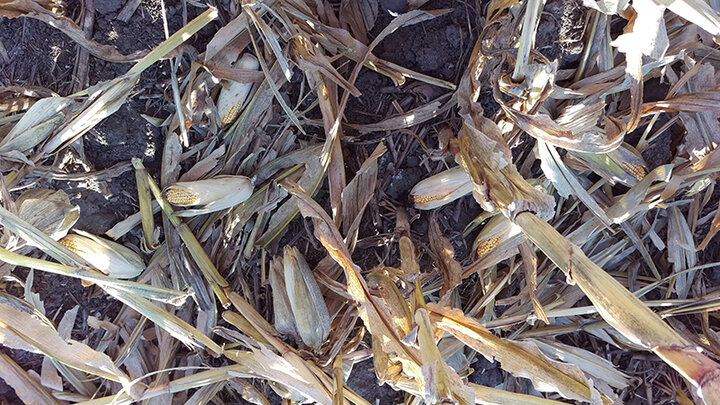
Grazing cattle may be an option for recovering some of the grain left in fields with significant corn lodging. However, excessive amounts of corn on the ground can increase the risk of grain overload (acidosis) in cattle. Producers should estimate the amount of corn remaining before grazing and develop a management plan to control grain intake.
For guidance on estimating corn losses and managing grazing risks, see "Estimating Bushels of Corn on the Ground by Counting Ears Prior to Grazing with Cattle" from UNL Beef.
Alternative Methods for Recovering Downed Corn
When lodged corn cannot be recovered with a conventional corn head, alternative methods may help salvage some of the crop. A 2012 CropWatch article documented several approaches used by Nebraska growers, including:
- Raking and combining: Use a V-rake to gather downed stalks and ears into windrows, then harvest with a combine equipped with a windrow pickup head. Slow operating speeds may be necessary, and dirt and heavy residue can increase plugging and equipment wear. One grower reported tying down the rake wheels to prevent them from riding over the stalks. Consult manufacturer guidance before attempting similar modifications, and be aware that this process can also damage rake teeth.
- Chopping and combining: Use a flail chopper to cut stalks and leaves, then rake the material and downed corn into windrows for collection with a combine equipped with a windrow pickup bean head.
- Chopping and baling for feed: After flail chopping, bale the plant material and corn for livestock feed. Test the nutrient content before feeding, as the material may contain substantially more grain than typical corn residue.
- Manual harvesting: Some growers have hired FFA chapters or other youth groups to manually recover corn from severely lodged fields where mechanical harvesting is difficult.
Resources
- Combine Adjustments for Harvesting Lodged Corn, Integrated Crop Management Aug. 21, 2020