Key Takeaways
- Early soil benefits: Biochar produced from locally harvested redcedar had rapid (less than 6 months) positive impacts on soil health, including an increase in soil carbon content and nitrate retention. However, further data are needed to evaluate the economic feasibility of this practice.
- Larger-scale application: At a lower application rate (8 tons/acre) and larger (16-acre) field experiment, wood-based biochar increased soil carbon and retention of nitrate and phosphate within the first 12 months of amendment. High-efficiency biochar application was accomplished with standard equipment used for other organic amendments (manure spreader and disc).
- On-farm research: On-farm trials are helping researchers evaluate biochar under local conditions. A research network established in 2025 is testing biochar effects on soil at different nitrogen fertilization rates at four on-farm field experiments to determine whether biochar can improve nitrogen use efficiency in Nebraska corn-soybean systems.
- Growing the Biochar Network: Starting in 2026, rancher-farmer partnerships will begin local production of biochar from eastern redcedar, with up to 10 such partnerships added to the network by 2027. Ranchers joining the network will receive assistance with redcedar removal while helping evaluate the costs and benefits of producing biochar from the removed wood. Farmers joining the network will apply locally produced redcedar biochar to determine impacts on crop yield and soil health across a range of site locations and conditions.
Why Biochar?
Practices that reduce nutrient losses, build soil organic carbon and improve water-holding capacity can help sustain crop productivity and reduce input costs. Biochar has emerged as one promising soil amendment that may provide some of these benefits. However, Nebraska currently lacks a biochar production industry and, although commercially available biochar prices have decreased over time, costs can still exceed $1,000 per ton (Trapero et al. 2025).
What Is Biochar and How Is It Used?
Biochar is a high-carbon conditioner produced by heating organic materials — such as crop residues, wood or manure — in a low-oxygen environment, a similar process to making charcoal. Biochar can contain more than 80% carbon, is highly resistant against microbial decomposition and can persist in soils for generations (Silva et al. 2021). Biochar can improve crop yields and yield stability by:
- Improving soil water and nutrient (including nitrate) retention, reducing fertilizer losses.
- Remedying deficiencies such as low pH, poor soil structure, very low organic matter content, or poor water retention.
- Improving soil health through addition of organic carbon (Karki et al. 2025).
Eastern Redcedar Biochar: Reducing Costs Through Local Production
Producing biochar locally from readily available materials could help lower costs and increase adoption (Zilberman et al. 2023). In the Great Plains, eastern redcedar offers a promising local feedstock. Woody encroachment degrades rangeland productivity, with the extent of impacted land estimated at nearly half a million acres (Shrestha et al. 2025).
Concerns about efficacy and costs limit biochar adoption and constrain development of a biochar industry in Nebraska, with active research efforts addressing the following questions:
- Is locally produced redcedar biochar effective for addressing nutrient and water use concerns when applied to both corn-soybean crop systems and other crop rotations used in Nebraska?
- Is biochar application efficient at larger (greater than 1 acre) field areas and across diverse locations?
- How efficient is biochar production from redcedar, and what are the lifecycle costs of this strategy from tree harvest to field application?
Case Studies: Evaluating Biochar Under Nebraska Field Conditions
Field Trials: Redcedar Biochar
In 2022, University of Nebraska-Lincoln (UNL) researchers Michael Kaiser, Arindam Malakar, Katja Koehler-Cole and Britt Fossum evaluated eastern redcedar-derived biochar in field trials at the Eastern Nebraska Research, Extension and Education Center (ENREEC) and South Central Agricultural Laboratory (SCAL). This study was one of the first Nebraska field trials using biochar produced locally in the Nebraska Sandhills.
Biochar was applied at 31 tons/acre to assess its potential to increase soil carbon storage, improve nitrogen retention and prevent nitrate leaching under rainfed and irrigated corn production. Nitrogen fertilizer was applied at a uniform rate of 220 lb N/acre using urea ammonium nitrate (UAN) to ensure differences observed were due to the biochar treatment rather than fertilizer management.


Field Trial: Acre-Scale Application of Biochar
A third field experiment was established in 2023 in Lincoln by the same UNL research team to test biochar performance combined with two fertilizer sources: an organic fertilizer (biosolid) at a rate of 10.9 tons/acre, and a commercial fertilizer supplying matched rates of nitrogen and unmatched rates of phosphorus and potassium (monoammonium phosphate, MAP at 81 lb/acre and potash at 121 lb/acre).
Biochar was applied at a lower rate of 8 tons/acre to one-acre plots within the 16-acre experiment. A manure spreader was used to apply target rates of biochar and biosolids, and both amendments were incorporated using a disc plow to a depth of approximately 3 inches.

Key Findings
- Biochar increased soil carbon storage and influenced nutrient retention. The greatest increases in soil carbon were observed under rainfed conditions, while nitrogen and phosphorus retention varied depending on fertilizer source and irrigation management.
- Biochar showed potential to improve fertilizer efficiency. Under the higher biochar applicaiton rate and high-er-yielding irrigated conditions, residual nitrogen suggested potential fertilizer savings of up to 35 lb UAN/acre. At the lower biochar application rate (8 tons/acre), reductions of approximately 22 lb/acre of MAP or 11 lb/acre of biosolid fertilizer may be possible. These results require validation through additional on-farm research.
- No significant yield differences were observed between biochar-treated soils in corn or soybean crops at both low and high biochar application rates. Biochar may increase profitability primarily through lower input costs associated with enhanced fertilizer retention. The field experimental data indicate that biochar did NOT immobilize fertilized nutrients (i.e. NO reduction in crop yield or nitrogen uptake).
- Eastern redcedar biochar can be produced locally using an abundant Nebraska biomass resource.
- Biochar can be applied with equipment used for other amendments. Initial experiments at research plots (ENREEC and SCAL) used hand tools to spread biochar prior to tillage, which is not practical for larger field trials or most row cropping systems. A conventional manure spreader successfully applied biochar at 8 tons/acre. Incorporation after application was necessary to minimize wind and erosion losses.
Site and Management Details | Biochar Rate | Soil OC Change (<12 months) | Yield (corn) | Residual Nitrate-N | Other Impacts |
ENREEC Rainfed Conventional: +/-Cover Crop 30 x 13 ft 2 replicates (2022), 3 replicates (2023–present) | 31 tons/acre 25 tons/acre OC | 27–33 tons/acre | No BC Effect 170 bushel/acre | No significant biochar effect. | Bulk Density: Up to 50% lower Microbial biomass: Biochar with cover crop: 60% increase Biochar alone: 44% increase |
SCAL Irrigated Conventional: +/-Cover Crop 30 x 20 ft (split) 3 replicates | 31 tons/acre 25 tons/acre OC | 13–29 tons/acre | No BC Effect 208 bushel/acre | BC Effect: +10–12 lb/acre ~35 lb/acre UAN | Bulk Density: 20–26% decrease Soil moisture content (0-3 inches): 20–40% increase (18 months) |
LINCOLN Rainfed Conventional: Biosolid or MAP 150 x 305 ft 4 replicates | 8 tons/acre 7 tons/acre OC | 8 tons/acre | No BC Effect 162 bushel/acre | BC Effect: ~22 lb/acre (MAP) ~11 lb/acre (Biosolid) | Available Phosphorus: MAP: 3x higher with biochar Biosolid: 2x higher with biochar Soybean N uptake: MAP: 40% increase with biochar |
Building a Nebraska On-Farm Biochar Network
An ongoing project led by UNL researchers Guillermo Balboa and Michael Kaiser is developing biochar experiments across the United States, with individual trials tailored to regional issues. The project is funded by the American Farmland Trust through the USDA NRCS Conservation Innovation Grant program.
The nationwide network will connect producers and researchers using biochar to address challenges within different production systems.
Within Nebraska, the primary aim is to use on-farm data to determine biochar impacts on nitrogen utilization in corn-soybean systems. Four five-acre fields in eastern and south-central Nebraska (Cass, Merrick and Hamilton counties) received 8 tons/acre of biochar in the fall of 2025, establishing long-term field trials that will monitor the effect of biochar over multiple years. Each site tests three nitrogen application rates with and without biochar amendment. Yield data will be available after the first season in September 2026, along with soil moisture and soil nitrate.
Growing the Biochar Network
Rancher-Farmer Partnerships for Redcedar-Derived Biochar Adoption and Industry Development
Field experiments and on-farm trials have generated critical data about effective biochar use in Nebraska agricultural systems, but the economic feasibility of in-state biochar production has not been assessed.
A new project beginning in fall 2026 will bring together ranchers removing eastern redcedar, biochar producers and neighboring crop producers interested in improving soil health and nutrient management. Led by Kaiser and funded through a UNL Department of Agronomy and Horticulture seed grant, Led by Kaiser and funded through a UNL Department of Agronomy and Horticulture seed grant, the project is a collaboration with Sandhills Biochar, founded by UNL alumnus Treaven Scheideler. Researchers will use mobile pyrolysis units (CharBoss) to turn removed redcedar into biochar for use on nearby cropland.
Producing and applying biochar close to where wood feedstock is harvested reduces transportation costs while creating value from a resource that is often burned, chipped or left to decompose.
Data from the partnerships will help researchers develop strategies for sourcing feedstock, producing biochar and expanding its use in Nebraska. Participants in this project will expand on the existing AFT network by establishing new trials in biochar production and utilization.
Partnership Strategy
- Rancher partners: Project funding will help cover labor costs for redcedar removal and biochar production, along with resources for managing treated acres.
- Farmer partners: Project funding will support biochar application and soil testing. Participants will receive results from soil health testing conducted before and after the experiment.
- Both partners: Researchers and other network members will provide guidance throughout the process.
- Two pilot partnerships have been established in Seward and Lancaster counties to begin producing biochar from locally harvested redcedar in fall 2026.
- Data from these demonstrations will be used to develop protocols for future partnerships, including recommendations for tree harvesting, biochar production, expected biochar yield and quality, labor requirements and production costs.
- Additional partnerships are being recruited throughout fall 2026. Protocols for biochar production and/or field trials can be adjusted to accommodate site-specific needs.
| Scenario 1 | Scenario 2 |
|---|---|
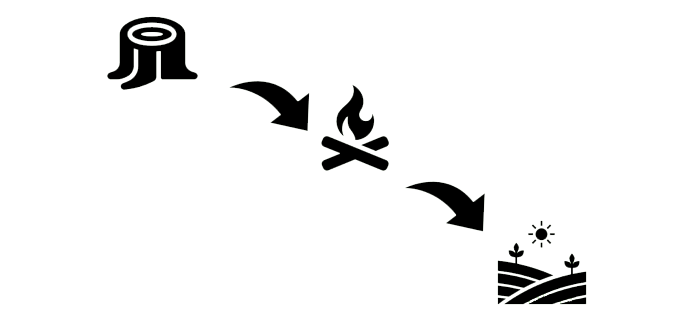
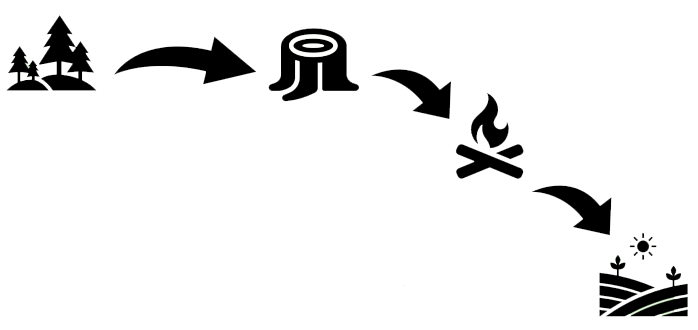
Lancaster County: Reinkordt Family Farm Site history: Family-owned farm. History of crop and more recently livestock production (pasture). Redcedar removal beginning in 2020 and stockpiled. Crop production: on-site, organic oats | Seward County: Blue Heron Tiospaye Site history: Indigenous-owned preserve. Increasing rate of redcedar removal in 2026 to restore native grassland. Crop production: <5 miles from production site, corn-soybean |
| 
|
Unknowns:
| Unknowns:
|
Interested in Partnering? Join Nebraska’s Biochar Network
The project is recruiting eight partnerships of ranchers and crop producers. Participating ranchers will supply redcedar for biochar production, and crop producers will evaluate locally produced biochar on up to 2 acres.
For more information, please contact Michael Kaiser or Britt Fossum.
Disclaimer: The research activities described in this article are made possible through funding from the USDA Hatch Capacity Program, the Nebraska Center for Energy Sciences Research, the Nebraska Forest Service, the Daugherty Water for Food Global Institute, the American Farmland Trust through the USDA Natural Resources Conservation Service – Conservation Innovation Grants Program, and the UNL Department of Agronomy and Horticulture. We also gratefully acknowledge the support of our collaborators, including the City of Lincoln, the Nebraska Biochar Initiative and Oregon Biochar Solutions.
References
- Karki, Sandhya, Raj Shrestha, Rattan Lal, Klaus Lorenz, and Laura E. Lindsey. 2025. “Effects of Biochar and Cover Crops on Physical Properties of Two Soils in Ohio.” Soil Science Society of America Journal 89 (2): e70041. https://doi.org/10.1002/saj2.70041.
- Silva, Lucas C. R., Rodrigo Studart Corrêa, Jamie L. Wright, et al. 2021. “A New Hypothesis for the Origin of Amazonian Dark Earths.” Nature Communications 12 (1): 127. https://doi.org/10.1038/s41467-020-20184-2.
- Trapero, J. R., A. Alcazar-Ruiz, F. Dorado, and L. Sanchez-Silva. 2025. “Biochar Price Forecasting: A Novel Methodology for Enhancing Market Stability and Economic Viability.” Journal of Environmental Management 377 (March): 124681. https://doi.org/10.1016/j.jenvman.2025.124681.
- Zilberman, David, David Laird, Coleman Rainey, Jie Song, and Gabriel Kahn. 2023. “Biochar Supply-Chain and Challenges to Commercialization.” GCB Bioenergy 15 (1): 7–23. https://doi.org/10.1111/gcbb.12952.