Key Points
Wait before deciding: Give crops several days after hail damage before making final stand loss or replant decisions.
Corn may recover: Early-season corn may look severely damaged, but yield loss is often limited before V6 unless stand loss is significant.
Soybean can regrow: Soybean can often recover from vegetative-stage defoliation if growing points remain intact.
Watch for disease: Hail wounds can increase risk for bacterial diseases such as Goss’s wilt, bacterial leaf streak and bacterial stalk rot.
Identify before treating: Fungicides are not effective against bacterial diseases, so correct diagnosis is important.
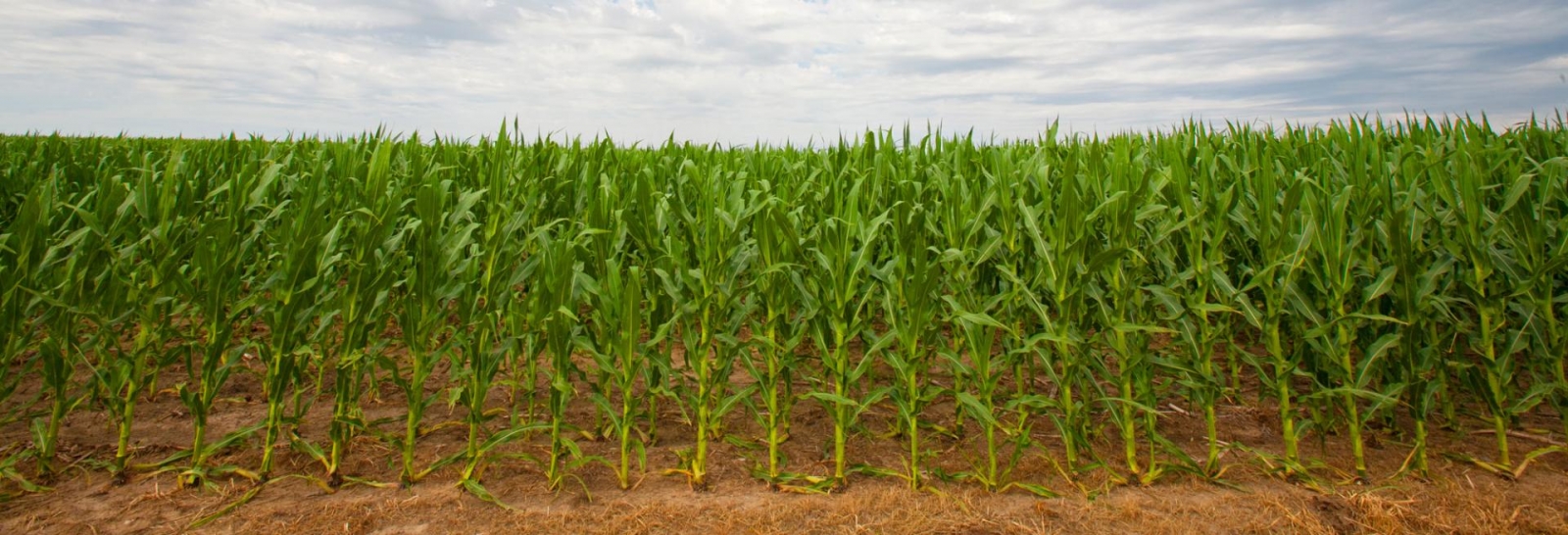
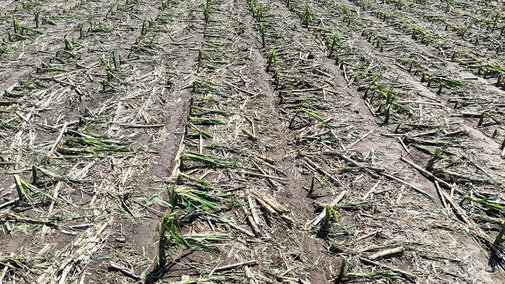
Hailstorms accompanied heavy rain across portions of central Nebraska on May 16, damaging corn and soybean fields that had only recently emerged. Most corn in affected areas was at V2 to V4, while many soybean were at V1 or just emerging.
Although the storms caused visible crop injury, the 1 to 3 inches of rainfall recorded with the storms also helped ease some immediate drought concerns. Over the next several days, affected crops should begin to recover, allowing producers to better assess stand loss, defoliation and other damage.
First Steps After Hail Damage
First, scout your fields to determine which ones need to be revisited after the crop has recovered to better assess damage, including stand loss and defoliation. If you carry a crop insurance policy, contact your insurance agent to generate the list of fields/farms that need to be visited by an adjustor. Follow directions to maintain insurance coverage on your field. Consider photographing damage to crops, structures and equipment, and noting the location (GPS if available). These photos may be helpful to your insurance agent.
If you need to refer back to an event in history, you can search for past storms on the National Oceanic and Atmospheric Administration (NOAA) site.
It is important to estimate the crop’s growth stage at the time of the hail event, as its ability to recover from hail damage depends on its growth stage. The Nebraska Extension resources linked in this article will help you assess crop damage at various growth stages and determine your management options. Yield loss data in these publications is based on information from the National Crop Insurance Service (NCIS).
Assessing Corn
The Nebraska Extension NebGuide EC126, “Evaluating Hail Damage to Corn,” discusses the three types of hail damage affecting corn: plant stand reduction, direct damage and leaf defoliation. It also discusses how to estimate yield loss and describes remedial actions for hail-damaged fields. Knowing the development stage and accurately estimating the extent of defoliation are essential to accurately assessing hail loss. During vegetative growth stages, NCIS uses the horizontal leaf method to stage corn growth instead of the leaf collar method. As a result, there are two more horizontal leaves than visible collars. Corn at the V5 growth stage (5 visible collars) is at the 6- to 7-leaf stage when adjustors determine loss on their tables. Before V5 (6- to 7-leaf stage), losses from leaf defoliation are usually minor, with most losses occurring from stand reduction. At the V6 growth stage, the growing point emerges above the soil surface, and the potential for stand losses and defoliation losses increases.
Hailed corn plants at these early development stages can look very poor, but the long-term damage and potential yield loss may be less than would occur from replanting now. Even at the 7-leaf to 9-leaf stages, 50% of leaf area can be destroyed, resulting in only 5% yield loss.
Be careful when assessing plant survival. It is difficult to distinguish living from dead tissue immediately after a storm, so delaying your assessment a week or so provides a more accurate assessment of viability. Plants with no clear regrowth can be opened to inspect the growing point. Another reason for delaying assessment is that some plants that initially survive a storm may soon die due to disease entering at the sites of plant or stalk damage. Warm, dry weather following the storm will promote faster recovery. Recent rains may promote infection for bacterial pathogens like bacterial leaf streak and Goss’s wilt.
Assessing Soybean
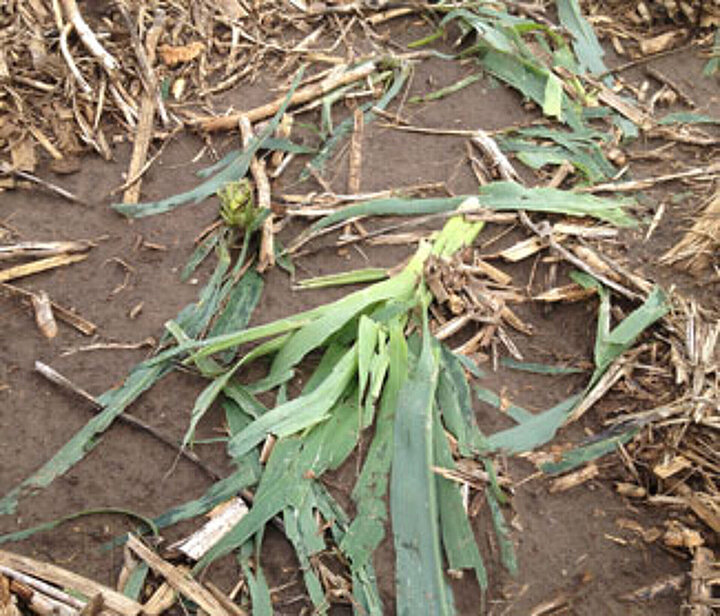
Nebraska Extension NebGuide EC128, “Evaluating Hail Damage to Soybeans,” describes procedures used to assess soybean hail damage. It may be useful in estimating crop yields from stand reduction, leaf defoliation, stem damage and pod damage, and includes a guide to determining crop growth stage. Fortunately, leaf loss and defoliation during the vegetative development stages have little effect on soybean yield. Stand losses impact final yields more than defoliation during vegetative stages.
For example, if the pre-storm plant population was 120,000 plants per acre and half the stand was destroyed, the yield potential would be 77% of normal, or a 23% reduction.
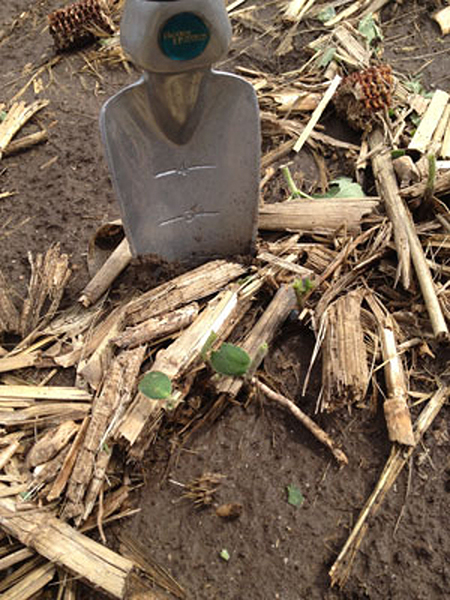
In contrast to corn, soybean have multiple aboveground growing points, any of which can generate a stem during vegetative growth stages. For example, a soybean plant at V1, or one trifoliolate leaf growth stage, has two axillary buds at the cotyledons, two at the unifoliate leaves, and one at the trifoliolate leaf, plus the one terminal bud, for a total of six buds available for growth. Therefore, soybean plants that were cut above the cotyledons have at least two axillary buds for regrowth (Figure 2).
The larger concern is hail during the emergence of soybean hypocotyls. This “neck” of the soybean pulls the cotyledons out of the ground. Damage or severing of the hypocotyl removes all growing points and will directly impact stand loss.
Replant Considerations
When considering this option, make sure to assess damage first. It may be best to wait a whole week to get an idea of full regrowth potential.
If corn was impacted by hail prior to V6 — which is most of the corn in central Nebraska — there should not be a need to replant.
For soybean, it is critical to assess the regrowth and stand from hail-damaged fields. Recent Nebraska On-Farm Research Studies (2024 and 2025) have shown soybean maintain yields with planting populations as low as 80,000 seeds/ac under irrigation and 100,000 seeds/ac on dryland acres. Plant stands on irrigated soybean studies ranged from 66,000-124,000 with no statistical differences in yield.
Bacterial Diseases
Goss's Bacterial Wilt
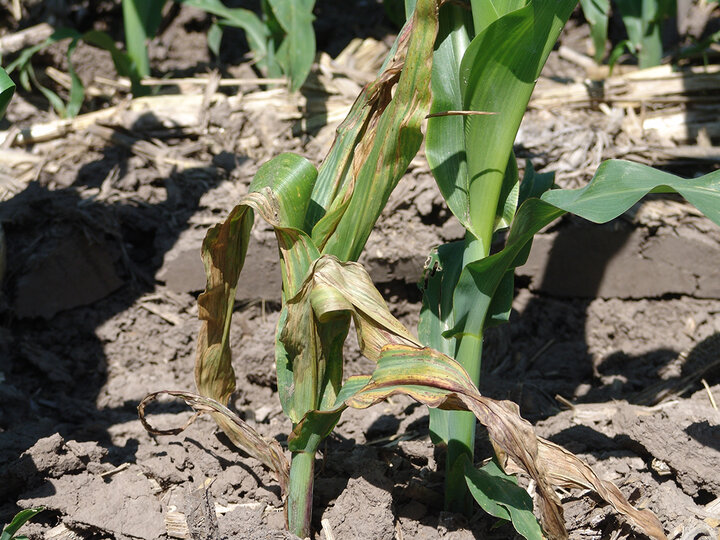
Variations in the yield potential of a hail-damaged field may be due to the presence of other yield-limiting factors. Wounds on plants caused by high winds, hail, etc. can allow some pathogens to enter the plant. Goss’s bacterial wilt and blight (caused by Clavibacter nebraskensis (Vidaver and Mandel) is a plant disease that can develop following severe weather, especially where corn has been hail-damaged (Jackson et al. 2007). The disease can occur in two phases: a systemic wilt phase and later leaf blight phase. Goss’s systemic wilt (Figure 3) may develop in plants that were damaged early season, especially before or by about the V6 leaf stage, as bacteria spread throughout the plant and may kill them.
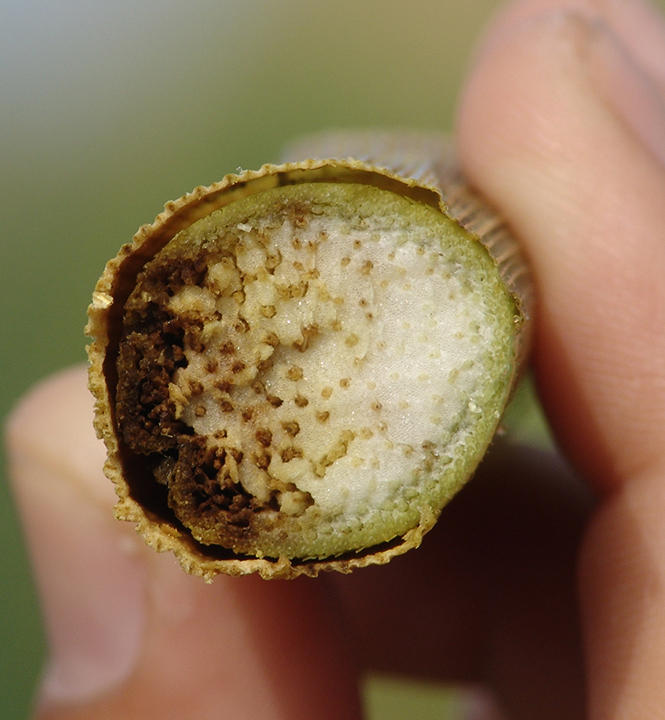
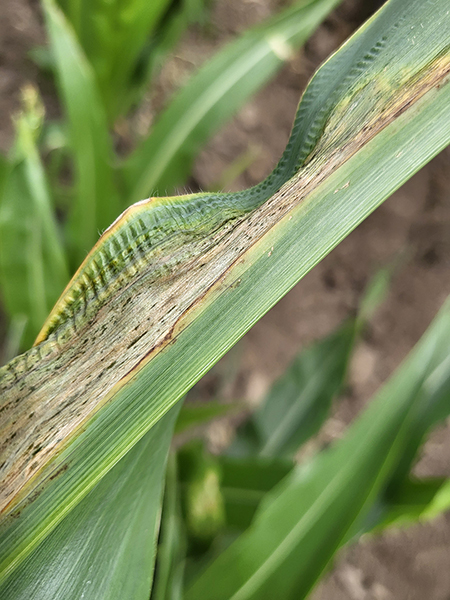
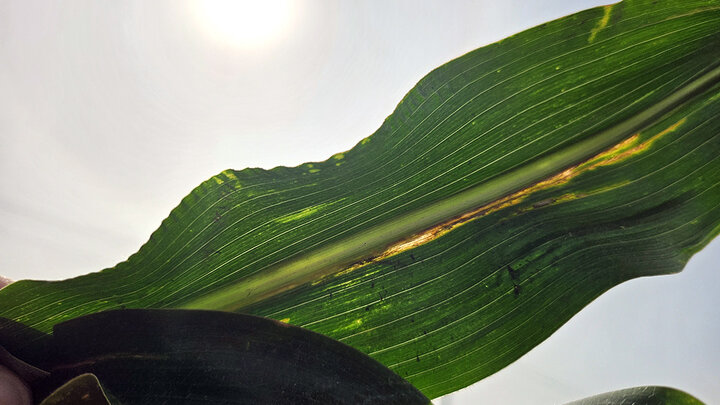
Symptoms of the more common leaf blight phase (Figure 5) first appear as large water-soaked lesions parallel to leaf veins that may have dark “freckles” near the edges. The leaf surface may appear shiny when bacterial exudate dries on the leaf. This exudate contains large amounts of bacteria that are pushed out of the lesions and can be washed away by rain or irrigation, making symptoms harder to see. Check the underside of leaves as well when scouting.
Infection is due to rain splash from infected crop residue onto open plant wounds (Claflin 1999) or less commonly, through natural openings in the plants. Rapid disease development occurs in warm, moist environments (Martin et al. 1975). Moderate to warm temperatures are favorable for the disease, but high temperatures over 100°F can slow disease development (Vidaver and Mandel 1974, Smidt and Vidaver 1986).
Bacterial Leaf Streak
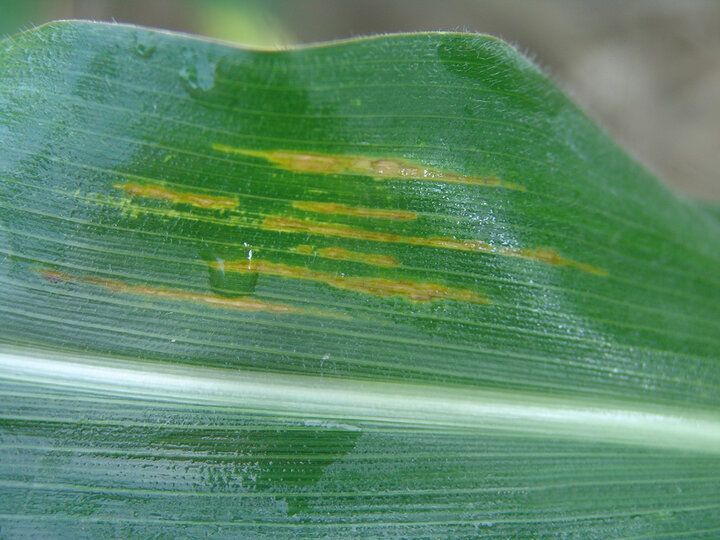
Bacterial leaf streak (caused by Xanthomonas vasicola pv. vasculorum) can also develop after storms, especially following heavy, wind-blown rain. Bacterial leaf streak is common and has been confirmed in at least 75 Nebraska counties and produces narrow tan to brown spots that can elongate into long, narrow lesions between leaf veins (Figures 6 and 7). The bacteria produce a yellow pigment that can make them appear bright yellow when backlit. The disease can appear similar to the fungal disease gray leaf spot, but often develops early during cooler weather, unlike gray leaf spot that is favored by warmer weather mid-season and produces rectangular, smooth lesions.
Bacterial Stalk Rot
Less commonly, bacterial stalk rot can occur in damaged plants at any stage of growth. This is another systemic bacterial disease that can kill individual or patches of plants and cause plants to develop slimy lesions and collapse. Affected plants usually have a foul odor.
Bacterial plant pathogens can be difficult to detect or evaluate within seven days of a hail event.
Farmers should consider cropping history and environmental conditions when considering additional risk or yield loss from these pathogens in hail-damaged fields. It’s important to correctly identify diseases before implementing management strategies because fungicides are not effective for the management of bacterial diseases.